

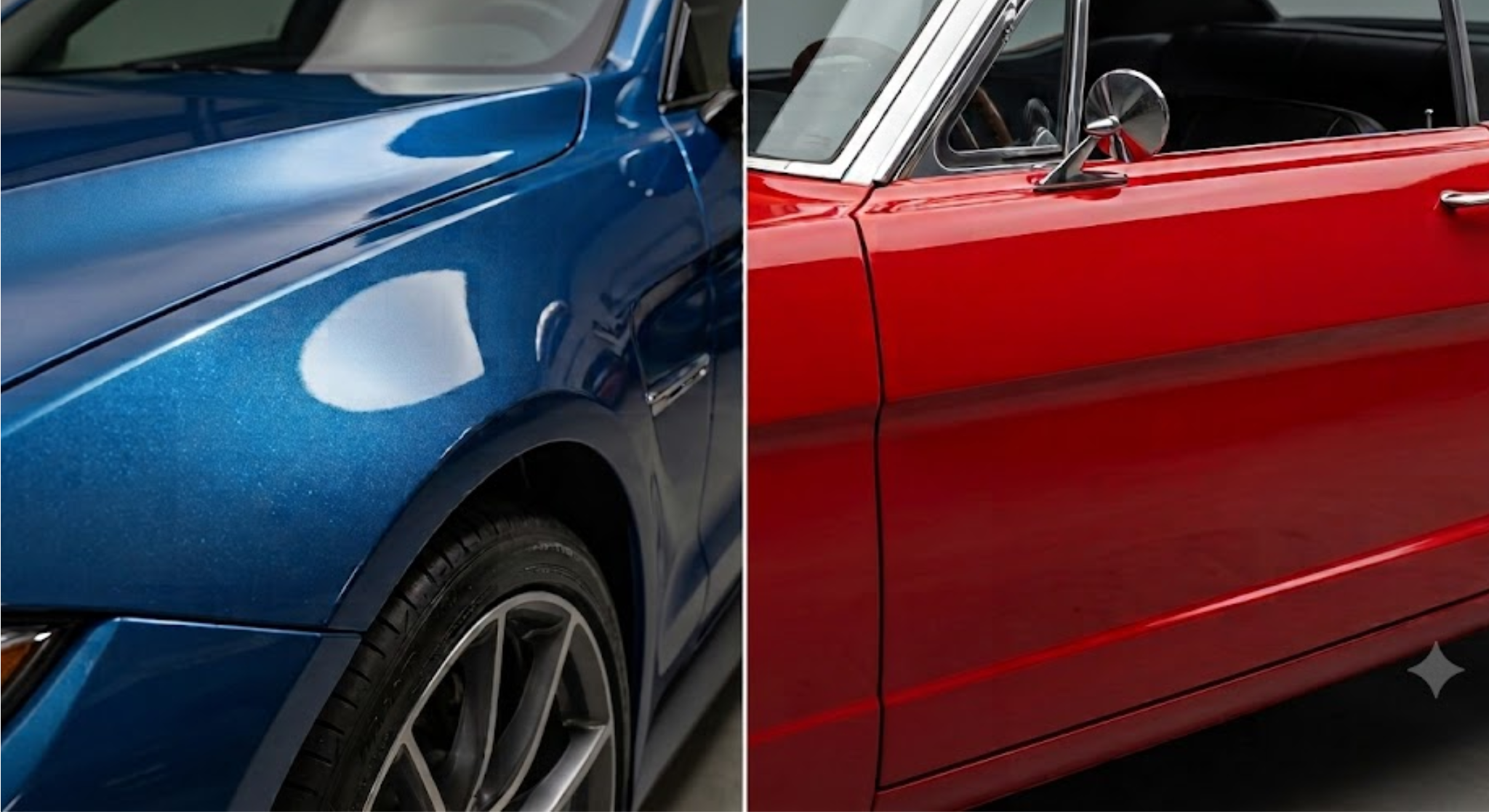

Whether restoring a classic car, executing a full custom build, or repairing a damaged panel on a daily driver, achieving an exact color match and flawless finish is the ultimate goal. In the world of automotive refinishing, nothing plays a more critical role in final appearance than the quality and chemistry of the base coat layer.
Historically, single-stage enamel and lacquer paints ruled the industry. While single-stage options applied color and shine in a single step, they lacked the depth, precision, and durability required for modern automotive finishes. Today, two-stage and tri-coat systems are the global gold standard and for good reason. Base coat ensures accurate color matching by isolating pure color pigments from high-gloss protective resins.
Understanding why Base Coat Automotive Paint delivers superior color fidelity, rich saturation, and consistent metallic alignment helps car builders and collision shops produce showroom-quality results every time.
1. Separation of Pigment and Gloss for Pure Color Density
In traditional single-stage paint, color pigments and gloss-producing resins are blended together in the same spray tin. As the paint dries, the gloss resins float to the surface while pigments settle below. This dual action dilutes the concentration of pigment at the visible surface, often leaving colors looking slightly muted or washed out.
[ Single-Stage Paint ] ──► Pigments + Resins Mixed ──► Surface Gloss Dilutes Color Depth

[ Base Coat System ]  ──► Pure Pigment Layer        ──► Maximum Saturation & Opacity
A dedicated base coat operates on a completely different principle:
- Pure Pigment Concentration: Base coat formulations focus almost exclusively on color density, opacity, and coverage. Because it does not need to produce its own shine, the binder matrix holds a significantly higher payload of raw color pigments.
- True Color Saturation: When applied over a properly prepped primer sealer, base coat lays down as a rich, flat color layer. This allows the true hue, value, and chroma of the paint formula to shine through without interference from glossy resins.
2. Unmatched Flake and Pearl Orientation
Modern vehicles rarely feature plain, flat colors. From subtle OEM pearlescents to dazzling custom metallic flake finishes, light interaction defines modern automotive design. Achieving consistent metallic shimmer without dark streaks or “tiger striping” is virtually impossible without a dedicated base coat.
┌─────────────────────────────────────────────────────────────────────────────┐
│                   METALLIC & PEARL ALIGNMENT MECHANICS                      │
├──────────────────────────────┬──────────────────────────────────────────────┤
│ System Type                  │ Flake Orientation Behavior                   │
├──────────────────────────────┼──────────────────────────────────────────────┤
│ **Single-Stage Paint**       │ Slow-drying gloss resins allow aluminum flakes│
│                              │ to sink, clump, or shift unevenly on panels. │
├──────────────────────────────┼──────────────────────────────────────────────┤
│ **Base Coat Paint**          │ Rapid solvent flash time locks flakes into   │
│                              │ uniform, flat suspension across the surface. │
└──────────────────────────────┴──────────────────────────────────────────────┘
Because base coat automotive paint dries quickly to a flat, semi-satin state, metallic aluminum flakes and synthetic mica pearls “freeze” in position almost immediately after leaving the spray gun. This rapid lock-in ensures even light reflection from every viewing angle, eliminating blotchiness and mottling.
3. Superior OEM Color Matching Capabilities
Collision repair centers face the challenge of matching factory finishes that have experienced varying degrees of sun exposure and atmospheric wear. Matching a 10-year-old metallic bumper to an original fender requires extreme precision and base coat systems make this possible.
[ OEM Variant Selection ] ──► Tinted Base Coat Pass ──► Seamless Panel Blending ──► Clearcoat Sealing
- Micro-Tinting Flexibility: Because base coats are non-glossy during application, technicians can make subtle tinting adjustments using specialized toner lines to match factory variance codes.
- Feathered Panel Blending: Technicians can “fade” or feather base coat color gently across an adjacent panel without altering the surrounding factory clearcoat. Once clearcoat is sprayed over the entire area, the repair boundary becomes completely invisible.
- Spectrophotometer Accuracy: Modern computerized color-matching cameras are programmed specifically around base coat pigment dynamics, ensuring precise formulation matches for thousands of paint codes.
4. Enhanced Depth and Optical Clarity Under Clearcoat
The visual depth of a high-end paint job comes from how light travels through the top layers, strikes the underlying color base, and bounces back to the eye.
[ Incoming Sunlight ] ──► Passes Through Clearcoat ──► Bounces off Base Coat ──► Rich Visual Depth
When a high-solids polyurethane clearcoat is applied over a fully cured base coat, it acts like a clear magnifying glass. The clearcoat absorbs UV light and provides a smooth optical lens that magnifies the rich pigments and reflective particles beneath. This two-layer synergy produces a deep “wet look” gloss that single-stage paints simply cannot replicate.
Base Coat Performance vs. Legacy Paints
| Performance Attribute | Legacy Single-Stage Paint | Base Coat / Clearcoat System |
| Color Precision & Opacity | Moderate; diluted by gloss resins. | Exceptional; maximum pigment saturation. |
| Metallic Flake Control | Poor; flakes sink or pool into dark streaks. | Superior; fast flash time locks flakes uniformly. |
| UV & Fade Resistance | Low; pigments are exposed to sun & weather. | High; clearcoat embeds UV blockers over base coat. |
| Color Sanding Safety | Sanding cuts directly into color pigment. | Sanding occurs strictly in the top clear layer. |
Conclusion
From crisp factory color matches to breathtaking custom metallic builds, base coat automotive paint remains the foundation of exceptional vehicle refinishing. By separating color saturation from protective gloss, base coat systems give painters complete control over pigment density, flake orientation, and panel blending.
When your build demands accurate color matching, rich depth, and long-lasting beauty, choosing a high-quality Base Coat Automotive Paint system ensures professional results that stand the test of time.
Frequently Asked Questions (FAQ)
Q: Why does base coat look dull when it first dries?
A: Base coat is formulated strictly for color pigment density and rapid flash time, not gloss. It is designed to dry to a flat or semi-satin finish until a high-gloss clearcoat is sprayed over it to unlock its shine and depth.
Q: How many passes of base coat are typically needed for full coverage?
A: Most standard base coat colors achieve full coverage (opacity) in 2 to 3 medium coats. Highly transparent shades or vibrant candy bases may require a color-matched primer sealer beneath them to reach complete opacity in fewer passes.
Q: Can you apply clearcoat over base coat the next day?
A: Every base coat manufacturer specifies a “recoat window” (usually between 20 minutes and 24 hours). If clearcoat is not applied within this window, the base coat loses its chemical bonding capability and must be scuffed and re-sprayed before clearcoating.