

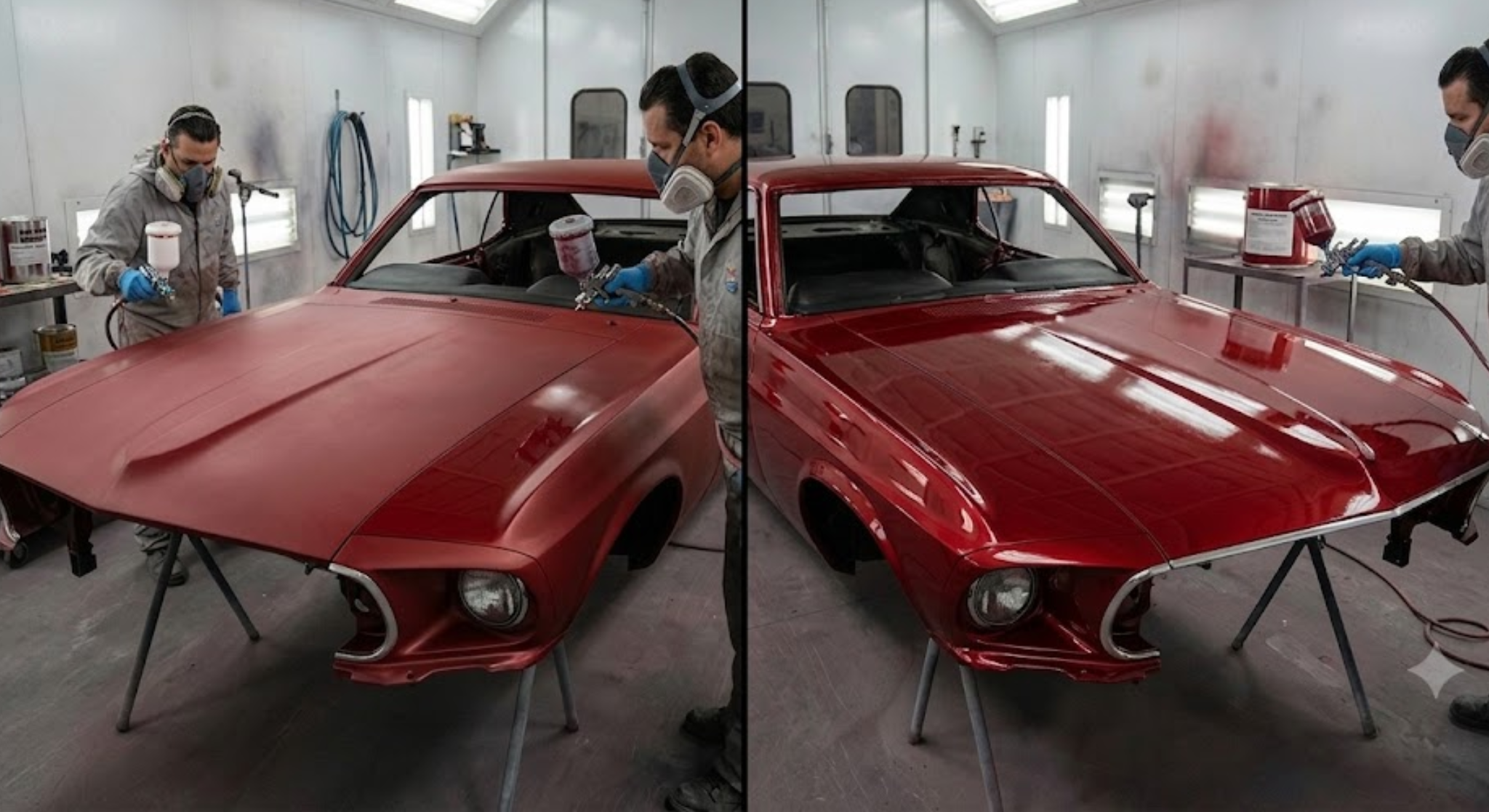

When embarking on a vehicle restoration, custom car build, or panel collision repair, one of the most fundamental decisions you will make is selecting the paint chemistry system. Modern automotive refinishing relies primarily on two main application methodologies: multi-stage systems featuring a dedicated color layer beneath a protective clearcoat, and traditional single stage coatings.
Navigating the choices between these formulations requires an understanding of how pigments, binders, and gloss resins function together. Basecoat systems differ from single-stage paint in how they cure, how visual special effects like metallic and pearl flakes are aligned, and how long the finished surface resists environmental oxidation.
This guide breaks down the core chemistry, application steps, durability, cost factors, and maintenance of Automotive Basecoat Paint versus single stage paint so you can make an informed choice for your project.
1. What Is Automotive Basecoat Paint (Two-Stage System)?
A basecoat/clearcoat system commonly referred to as a two-stage finish separates the color and protective properties of paint into distinct, specialized layers.
┌─────────────────────────────────────────────────────────────────────────────┐
│                 TWO-STAGE BASECOAT / CLEARCOAT ARCHITECTURE                 │
├──────────────────────────────┬──────────────────────────────────────────────┤
│ Layer                        │ Primary Function & Characteristics           │
├──────────────────────────────┼──────────────────────────────────────────────┤
│ **Clearcoat Topcoat**        │ High-gloss polyurethane resin embedded with  │
│                              │ UV blockers; resists scratches and weather.  │
├──────────────────────────────┼──────────────────────────────────────────────┤
│ **Automotive Basecoat**      │ Highly pigmented matte color layer; carries  │
│                              │ metallic flakes, pearls, or solid tones.     │
├──────────────────────────────┼──────────────────────────────────────────────┤
│ **Primer / Sealer Base**     │ Adhesion layer over sanded metal or bodywork;│
│                              │ provides a smooth, uniform color foundation. │
└──────────────────────────────┴──────────────────────────────────────────────┘
The basecoat layer contains concentrated color pigments, aluminum metallic flakes, or mica pearls suspended in a fast-drying solvent or waterborne binder matrix. When sprayed, basecoat dries quickly to a flat, non-glossy satin finish. It provides zero weather resistance or UV protection on its own.
Once the basecoat flashes dry, a durable, transparent polyurethane clearcoat is applied over top. The clearcoat seals the color layer, provides chemical and scratch resistance, and creates a high-gloss, deep visual finish.
2. What Is Single Stage Paint?
Single stage paint is a traditional coating system where color pigment, binders, and gloss-producing resins are blended into a single liquid mixture. When you apply single stage paint, you spray color and gloss simultaneously in one operation.
[ Single Stage Paint Spray ] ──► Pigment + Resin Cure Together into 1 Glossy Layer
Single stage paints (commonly available in acrylic enamel, alkyd enamel, or single-stage acrylic urethane) cure into a hard, glossy outer shell without requiring a secondary clearcoat pass. Single stage formulations were the standard factory choice for production automobiles prior to the late 1970s and 1980s.
3. Key Differences: Basecoat Systems vs. Single Stage Paint
Comparing these two refinishing approaches across critical performance metrics highlights which system best matches your garage capabilities, build goals, and project budget.
| Feature / Performance Metric | Two-Stage Automotive Basecoat System | Traditional Single Stage Paint System |
| Number of Process Steps | Requires separate basecoat passes + clearcoat passes. | Single application process for color and gloss. |
| Visual Depth & Flake Alignment | Superior depth; precise orientation for metallic and pearl flakes. | Good gloss on solid colors; metallic flakes can sink or pool. |
| UV Resistance & Longevity | High; heavy UV inhibitors are embedded in the clear layer. | Moderate; color pigments are directly exposed to weathering. |
| Sanding & Buffing | Sanding and color sanding occur strictly in the clear layer. | Sanding cuts directly into color pigments, altering shade. |
| Repairability & Blending | Easy to blend basecoat on partial panels and clear the whole panel. | Difficult to spot-repair or blend without showing edge lines. |
| Material & Application Cost | Higher material cost due to separate clearcoat products. | Budget-friendly; fewer spray passes and shorter booth times. |
4. Visual Flake Alignment and Special Effects
If your custom project features metallic, pearl, or candy paint effects, two-stage basecoat systems hold a major technical advantage.
[ Basecoat Suspension ]  ──► Fast-drying matrix locks aluminum/pearl flakes in place

[ Single Stage Mixture ] ──► Slow-drying wet gloss resins cause metallic flakes to sink
In a basecoat formulation, solvents evaporate rapidly after spraying. This quick flash time “locks” aluminum flakes and pearl particles in uniform alignment across both vertical and horizontal panels.
Conversely, because single stage paint stays wet longer so that resins can flow out into a glossy finish, heavy metallic particles tend to float, sink, or pool unevenly. This can lead to dark streaks or “tiger striping” on wide hoods and door panels.
5. UV Protection, Longevity, and Maintenance
The primary threat to any exterior automotive finish is ultraviolet (UV) radiation from direct sunlight, which degrades chemical bonds in paint pigments, causing chalking, fading, and surface dullness.
- Basecoat/Clearcoat Protection: In a two-stage system, high concentrations of UV absorbers and light stabilizers are formulated into the thick clearcoat top layer. This protective barrier shields the delicate color pigments beneath, keeping deep reds, dark blues, and blacks rich for decades without chalking.
- Single Stage Protection: In a single stage finish, the color pigments sit directly on the outer surface. Over time, UV exposure oxidizes the outer resin layer, requiring frequent compounding, polishing, and waxing to restore lost shine.
6. Color Sanding, Buffing, and Spot Repairs
For show car builders seeking a glass-like finish, “color sanding” (wet sanding with high-grit sandpaper to eliminate orange peel texture) is an essential step.
┌─────────────────────────────────────────────────────────────────────────────┐
│                       COLOR SANDING SAFETY COMPARISON                       │
├──────────────────────────────┬──────────────────────────────────────────────┤
│ System                       │ Sanding Safety Threshold                     │
├──────────────────────────────┼──────────────────────────────────────────────┤
│ **Basecoat / Clearcoat**     │ You sand strictly within 2 to 3 mils of clear│
│                              │ coat, leaving underlying color untouched.    │
├──────────────────────────────┼──────────────────────────────────────────────┤
│ **Single Stage**             │ Sanding directly cuts into color pigment;    │
│                              │ risks altering shade or burning through.     │
└──────────────────────────────┴──────────────────────────────────────────────┘
Repairing minor scratches or rock chips is also substantially easier with two-stage basecoat paint. Technicians can feather basecoat color over a localized repair area and apply clearcoat over the entire panel, creating an invisible blend.
Conclusion: Which Paint System Should You Choose?
Both coating systems fulfill distinct roles in the automotive restoration and collision repair industries.
Choose Automotive Basecoat Paint (Two-Stage) if:
- You are spraying metallic, pearl, or custom tri-coat finishes.
- You want maximum long-term UV protection and gloss retention with minimal waxing.
- You plan to wet sand and buff the finish to achieve a mirror-like show car appearance.
- You need to perform spot repairs or panel blending on a daily driver.
Choose Single Stage Paint if:
- You are restoring a vintage vehicle to match era-correct factory single stage finishes.
- You are painting solid non-metallic colors (like classic white, black, or red).
- You are working with a tight budget or painting utility vehicles, trailers, or interior engine bays where fast turnover is preferred.
By evaluating your build goals, equipment, and desired finish quality, you can select the ideal paint system to ensure your vehicle looks stunning for years to come.
Frequently Asked Questions (FAQ)
Q: Can you apply a clearcoat over single stage paint?
A: Yes. Applying a urethane clearcoat over a single stage finish is possible if the single stage paint has flashed off properly. However, using a dedicated basecoat formulated specifically to bond with clearcoat is generally more cost-effective and durable.
Q: Is waterborne basecoat better than solvent-based basecoat?
A: Both deliver exceptional finish quality. Waterborne basecoats reduce volatile organic compound (VOC) emissions, offer cleaner OEM color matching, and feature excellent metallic flake suspension. Solvent basecoats remain popular among custom painters for fast flash times and ease of use in non-commercial spray booths.
Q: How many coats of basecoat should be applied?
A: Typically, 2 to 3 medium coats of basecoat provide complete color coverage (opacity). Highly transparent colors or metallic bases may require a tinted primer sealer beneath them to achieve full coverage in fewer passes.