
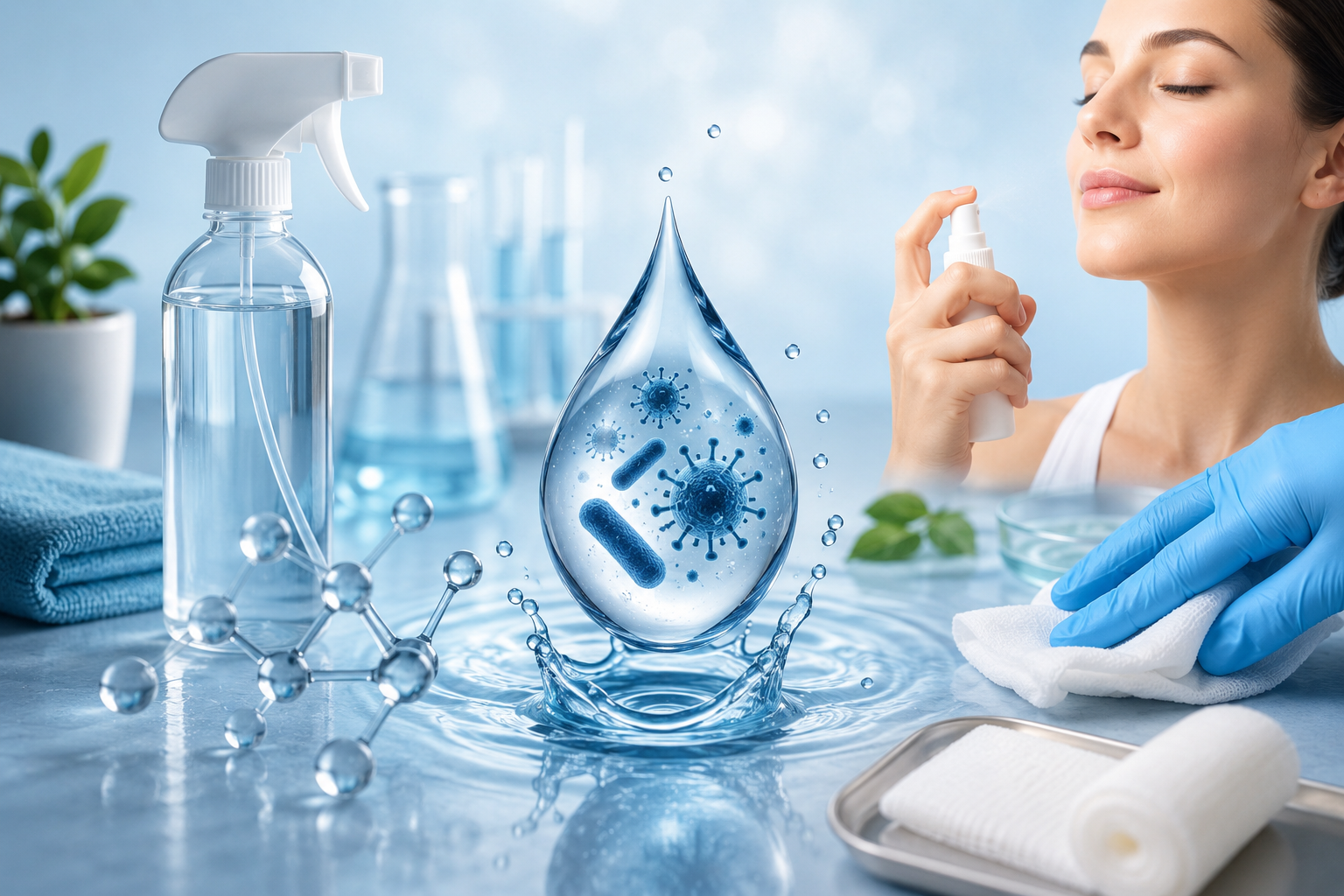

What Is Hypochlorous Acid?
Hypochlorous acid (HOCl) is a naturally occurring molecule produced by white blood cells as part of the body’s immune response. When bacteria, viruses, or other harmful microorganisms enter the body, immune cells generate hypochlorous acid to help eliminate these threats.
Scientists have replicated this process through specialized manufacturing techniques to create stable solutions that can be safely used outside the body. Today, hypochlorous acid is commonly found in products designed for:
- Wound cleansing
- Medical equipment sanitation
- Surface disinfection
- Skin care
- Veterinary care
- Food preparation facilities
- Cosmetic applications
Unlike many traditional disinfectants, properly manufactured hypochlorous acid solutions can effectively eliminate pathogens while remaining non-irritating to healthy skin.
How Does Hypochlorous Acid Work?
Hypochlorous acid works by attacking microorganisms at the cellular level.
When it comes into contact with bacteria, viruses, fungi, or other harmful organisms, it disrupts their cell walls and internal structures. This process quickly inactivates or destroys the microorganisms without leaving behind significant harmful residues.
Because hypochlorous acid is similar to what the human immune system naturally produces, it provides effective antimicrobial action while minimizing unnecessary damage to surrounding healthy tissue.
This unique balance has made it a preferred option in many healthcare environments.
Common Uses of Hypochlorous Acid
One reason for the rapid growth of hypochlorous acid products is their versatility.
Medical Applications
Hospitals and clinics frequently use hypochlorous acid for:
- Wound irrigation
- Surgical site preparation
- Medical equipment cleaning
- Infection control
- General sanitation
Healthcare professionals appreciate its effectiveness against many common pathogens while remaining gentle enough for patient care.
Skincare Products
Many skincare brands now incorporate hypochlorous acid into facial sprays and cleansers.
It may help:
- Reduce redness
- Calm irritated skin
- Support acne-prone skin
- Refresh the complexion after workouts
- Promote healthier-looking skin
Its gentle nature makes it suitable for many skin types, including sensitive skin.
Surface Disinfection
Homes, schools, offices, and commercial facilities increasingly rely on hypochlorous acid for routine cleaning.
It can be used on:
- Countertops
- Door handles
- Furniture
- Medical surfaces
- Gym equipment
- Public spaces
Many users appreciate that it leaves little odor compared to bleach-based products.
Veterinary Care
Veterinarians often use hypochlorous acid solutions for:
- Animal wound care
- Skin cleansing
- Kennel sanitation
- Equipment cleaning
Its gentle properties help make treatment less stressful for animals.
Benefits of Hypochlorous Acid
Several characteristics distinguish hypochlorous acid from traditional disinfectants.
Highly Effective
Properly formulated hypochlorous acid demonstrates strong antimicrobial activity against a wide range of bacteria, viruses, and fungi.
Gentle on Skin
Unlike harsh chemical disinfectants, hypochlorous acid is generally well tolerated when manufactured for skin contact.
Environmentally Friendly
Many hypochlorous acid solutions break down into naturally occurring substances after use, reducing environmental impact.
Minimal Odor
Unlike bleach or alcohol products, hypochlorous acid typically has little to no strong chemical smell.
Multiple Applications
The same technology can often support products intended for healthcare, cosmetics, sanitation, and industrial applications.
Is Hypochlorous Acid Safe?
Safety is one of the primary reasons behind its growing popularity.
When manufactured according to quality standards and used as directed, hypochlorous acid is generally considered safe for many intended applications.
However, product quality matters significantly. Stability, concentration, pH, and manufacturing methods all influence effectiveness and safety.
Consumers should always purchase products from reputable manufacturers that follow recognized quality control practices.
Organizations like R & D Medical Products help support industries by developing advanced manufacturing solutions designed to meet regulatory expectations while maintaining consistent product quality.
Hypochlorous Acid vs Bleach
Although they sound similar, hypochlorous acid and bleach are not the same.
Bleach primarily contains sodium hypochlorite at much higher alkalinity, making it significantly more irritating to skin and surfaces.
Hypochlorous acid, on the other hand, exists at a much more skin-friendly pH when properly formulated.
| Hypochlorous Acid | Bleach |
|---|---|
| Naturally produced by white blood cells | Synthetic cleaning chemical |
| Gentle on skin | Can cause irritation |
| Minimal odor | Strong chemical smell |
| Suitable for many medical uses | Primarily household cleaning |
| Broad antimicrobial action | Broad antimicrobial action |
How Is Hypochlorous Acid Manufactured?
Modern production relies on carefully controlled electrochemical processes.
Manufacturers typically begin with purified water and salt. Specialized electrolysis equipment generates hypochlorous acid while carefully controlling variables such as:
- pH
- Oxidation reduction potential
- Concentration
- Purity
- Stability
Maintaining these factors requires sophisticated quality systems, especially for medical-grade applications.
Experienced manufacturers understand the importance of producing stable solutions that maintain effectiveness throughout their intended shelf life.
Choosing Quality Hypochlorous Acid Products
Not every product on the market offers the same performance.
When evaluating products, consider:
Manufacturing Standards
Look for manufacturers with strong quality assurance programs and regulatory compliance.
Intended Use
Different formulations may be designed for:
- Medical care
- Cosmetic use
- Surface disinfection
- Industrial sanitation
Choose the product intended for your specific application.
Product Stability
High-quality formulations maintain their effectiveness during storage when handled according to manufacturer recommendations.
Packaging
Proper packaging protects hypochlorous acid from environmental conditions that could reduce effectiveness.
Industries That Benefit From Hypochlorous Acid
Today, hypochlorous acid serves numerous industries.
Healthcare facilities rely on it for infection prevention.
Cosmetic companies formulate skin-friendly facial sprays and cleansers.
Food processing facilities use appropriate formulations for sanitation.
Veterinary clinics appreciate its gentle antimicrobial properties.
Manufacturing companies continue investing in research that expands new applications while maintaining safety and regulatory compliance.
The Future of Hypochlorous Acid
Interest in hypochlorous acid continues growing as more industries recognize its combination of effectiveness and safety.
Researchers continue exploring additional uses in:
- Advanced wound care
- Infection prevention
- Cosmetic innovation
- Medical device manufacturing
- Food safety
- Industrial sanitation
As technology advances, manufacturers are expected to improve formulation stability, production efficiency, and product accessibility for consumers and healthcare providers alike.
Final Thoughts
Hypochlorous acid has become an important innovation in modern healthcare, sanitation, and personal care. Its natural origins, powerful antimicrobial activity, and gentle profile make it an attractive option across many industries.
Whether used in wound care, skincare, medical facilities, or routine sanitation, hypochlorous acid continues to demonstrate why it has become a trusted solution worldwide. A versatile disinfectant trusted across medical and cosmetic uses.
With continued research, responsible manufacturing, and contributions from organizations such as R & D Medical Products, hypochlorous acid is positioned to remain an essential component of future healthcare and hygiene solutions.
For more informative articles on healthcare innovations, manufacturing technologies, and industry insights, visit https://hereisnewyork.org/.
Frequently Asked Questions
What is hypochlorous acid used for?
Hypochlorous acid is commonly used for wound care, skin cleansing, medical disinfection, surface sanitation, veterinary care, and cosmetic products.
Is hypochlorous acid safe for sensitive skin?
Many properly formulated hypochlorous acid products are designed to be gentle enough for sensitive skin. Always follow the manufacturer’s usage instructions.
Does hypochlorous acid kill bacteria and viruses?
Yes. Hypochlorous acid has broad antimicrobial activity against many bacteria, viruses, and fungi when used appropriately.
Is hypochlorous acid the same as bleach?
No. Although chemically related, hypochlorous acid is much gentler than household bleach and is formulated differently for various applications.
Why is hypochlorous acid becoming more popular?
Its combination of strong disinfecting performance, gentle skin compatibility, minimal odor, and environmental friendliness has contributed to its increasing popularity.