

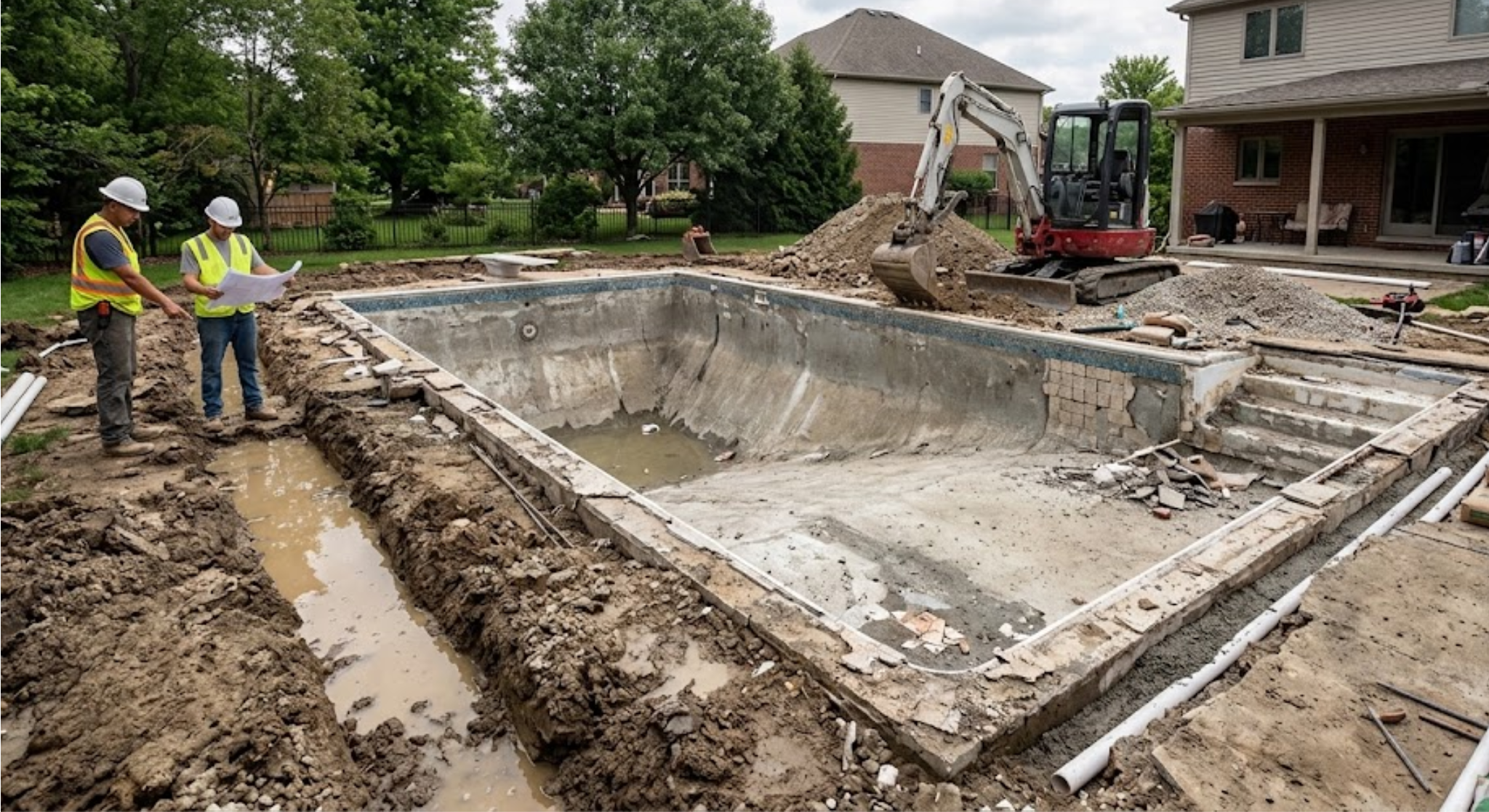

When Austin homeowners plan a backyard pool renovation, their attention naturally focuses on aesthetic upgrades selecting rich aggregate plaster finishes, installing vibrant waterline tile, laying custom limestone coping, or adding LED lighting systems. However, beneath the visual beauty of any luxury swimming pool lies a critical engineering component that dictates whether your renovation investment lasts for decades or fails prematurely: drainage.
Managing water movement around and beneath your pool deck is essential during a major overhaul. The combination of central Texas’s expansive clay soil, sudden torrential weather events, and heavy backyard deck structures creates a challenging environment for underground stability.
Failing to address surface run-off, hydrostatic groundwater pressure, and deck elevation during construction can lead to catastrophic structural damage, shifted paving, and compromised plaster finishes. Poor drainage during a remodel can lead to structural issues. Trust an experienced pool renovation company in Austin like Clear Solutions to manage it right.
Here is a comprehensive look at why drainage must be a top priority during your pool renovation and how proper water management protects your property investment.
1. Understanding Central Texas Soil Mechanics and Hydrostatic Pressure
The ground across Greater Austin and the Texas Hill Country presents unique subterranean challenges. High concentrations of expansive clay soil swell dramatically when saturated with water and shrink during dry summer heatwaves.
[ Unmanaged Rain / Runoff ] ──► Clay Soil Absorbs Water & Swells ──► Lateral Pressure Transferred to Pool Shell
When heavy rains soak into soil surrounding a concrete pool shell without proper subterranean relief:
- Hydrostatic Pressure Buildup: Trapped groundwater exerts thousands of pounds of upward and inward pressure against the gunite pool shell.
- Pool Shell Displacement: In severe scenarios—especially when a pool is drained for re-plastering—hydrostatic pressure can actually lift an empty pool shell out of the ground or cause structural wall cracking.
- Decoupling and Delamination: Water trapped behind pool plaster or beneath new deck pavers causes new plaster applications to pop, shell-delaminate, or crack along stress lines.
Installing dedicated hydrostatic relief valves in the pool floor and subterranean hydrostatic drainage systems around the pool perimeter mitigates these soil expansion risks entirely.
2. Preventing Surface Water Runoff Contamination
During severe Austin thunderstorms, unmanaged surface water carries soil, lawn fertilizers, mulch debris, and organic tannins across your patio directly into your newly finished pool.
┌─────────────────────────────────────────────────────────────────────────────┐
│                    SURFACE DRAINAGE SYSTEM COMPARISON                       │
├──────────────────────────────┬──────────────────────────────────────────────┤
│ Drainage Solution            │ Primary Protective Advantage                 │
├──────────────────────────────┼──────────────────────────────────────────────┤
│ **Strip / Channel Drains**   │ Installed flat along deck seams to capture   │
│                              │ large surface water volumes across wide decks│
├──────────────────────────────┼──────────────────────────────────────────────┤
│ **Area Deck Drains**         │ Point drains positioned in pitched deck slopes│
│                              │ to divert water away from house foundations. │
├──────────────────────────────┼──────────────────────────────────────────────┤
│ **French Drains & Swales**   │ Subterranean gravel trenches diverting lawn  │
│                              │ runoff before it reaches pool decking edges. │
└──────────────────────────────┴──────────────────────────────────────────────┘
Without adequate deck slope and channel drainage installed during your renovation, rainwater will breach the pool coping. This introduces harsh contaminants that destabilize water chemistry, overload filtration pumps, and leave stubborn mineral stains on brand-new plaster surfaces.
3. Protecting Home Foundations and Decking Structures
A pool renovation often involves tearing out and pouring new concrete decking, laying travertine coping, or expanding outdoor living patios. Altering the grade or elevation of your backyard patio changes how rainwater flows across your entire property.
[ Poor Deck Pitching ] ──► Water Pools Against House Foundation ──► Costly Structural Settling & Soil Erosion
An experienced Pool Renovation Company Austin evaluates the complete elevation layout during renovation:
- Deck Pitch Configuration: Ensuring patio surfaces maintain a minimum quarter-inch per foot slope directed away from both the pool water and the home foundation.
- Foundation Safeguarding: Preventing standing water from accumulating against home walls, retaining structures, or foundation slabs.
- Preventing Paver Settling: Keeping deck bedding layers dry prevents paver shifting, cracking, and trip hazard development along patio walkways.
4. Drainage Considerations When the Pool Is Drained
The most vulnerable phase of any pool remodel occurs when the water is completely drained to execute surface chipping, tile removal, or gunite repairs. Water inside an filled pool provides thousands of pounds of downward ballast that holds the structure securely in place against ground pressures.
Crucial Contractor Protocol: Draining a pool without first inspecting ground moisture levels, verifying water table heights, and opening hydrostatic pressure relief plugs exposes the pool shell to structural popping or wall rupture.
Professional crews evaluate groundwater conditions before draining and ensure continuous sump pumps or subterranean de-watering systems remain active throughout the plaster removal and curing phases.
5. Key Drainage Components Every Pool Remodel Should Include
When reviewing your renovation contract and scope of work, verify that your project includes integrated water management components tailored to your yard’s topography:
| Drainage Element | Functional Scope | Long-Term Benefit |
| Hydrostatic Relief Valves | Check valves installed in pool floor sumps. | Releases underground water pressure harmlessly into the pool shell during maintenance. |
| Deck Channel Drains | Sleek, flush-mounted surface drain grates. | Captures heavy splash-out and rainwater, diverting it away from house walls. |
| Perimeter Swales & French Drains | Gravel and perforated pipe subterranean systems. | Intercepts ground runoff coming down Hill Country slopes before hitting patio edges. |
| Deck Slope Calibration | Precision laser leveling of new concrete or pavers. | Eliminates standing puddles and slipperiness across pool decks. |
Conclusion
A successful pool renovation requires a balance of stunning aesthetic design and sound structural engineering. By making proper surface and subsurface drainage a central component of your pool remodel, you protect your pool shell, decking, house foundation, and new plaster finish against the costly damages caused by unmanaged water movement.
Ready to renovate your backyard swimming pool with structural confidence and long-term peace of mind? Partner with the local drainage and pool renovation specialists at Clear Solutions Pool Plastering to schedule your comprehensive site consultation today.
Frequently Asked Questions (FAQ)
Q: What is hydrostatic pressure, and how can it damage a swimming pool during remodeling?
A: Hydrostatic pressure is the force exerted by groundwater standing in the surrounding soil. When a pool is drained for renovation, this subterranean water pressure can crack the concrete shell or lift the entire pool out of the ground if hydrostatic relief plugs are not opened.
Q: Can bad deck drainage affect my new pool plaster?
A: Yes. Poor deck drainage allows dirty surface runoff carrying soil, lawn chemicals, and organic matter to spill into the pool water. This introduces harsh minerals and contaminants that cause surface staining, scaling, and chemical imbalance on fresh plaster finishes.
Q: How do I know if my backyard needs updated drainage during a pool remodel?
A: If you notice standing water on your deck after rain, soil erosion along patio edges, cracking concrete, or rainwater flowing toward your house foundation or pool cope, your drainage system needs to be updated during your renovation.