

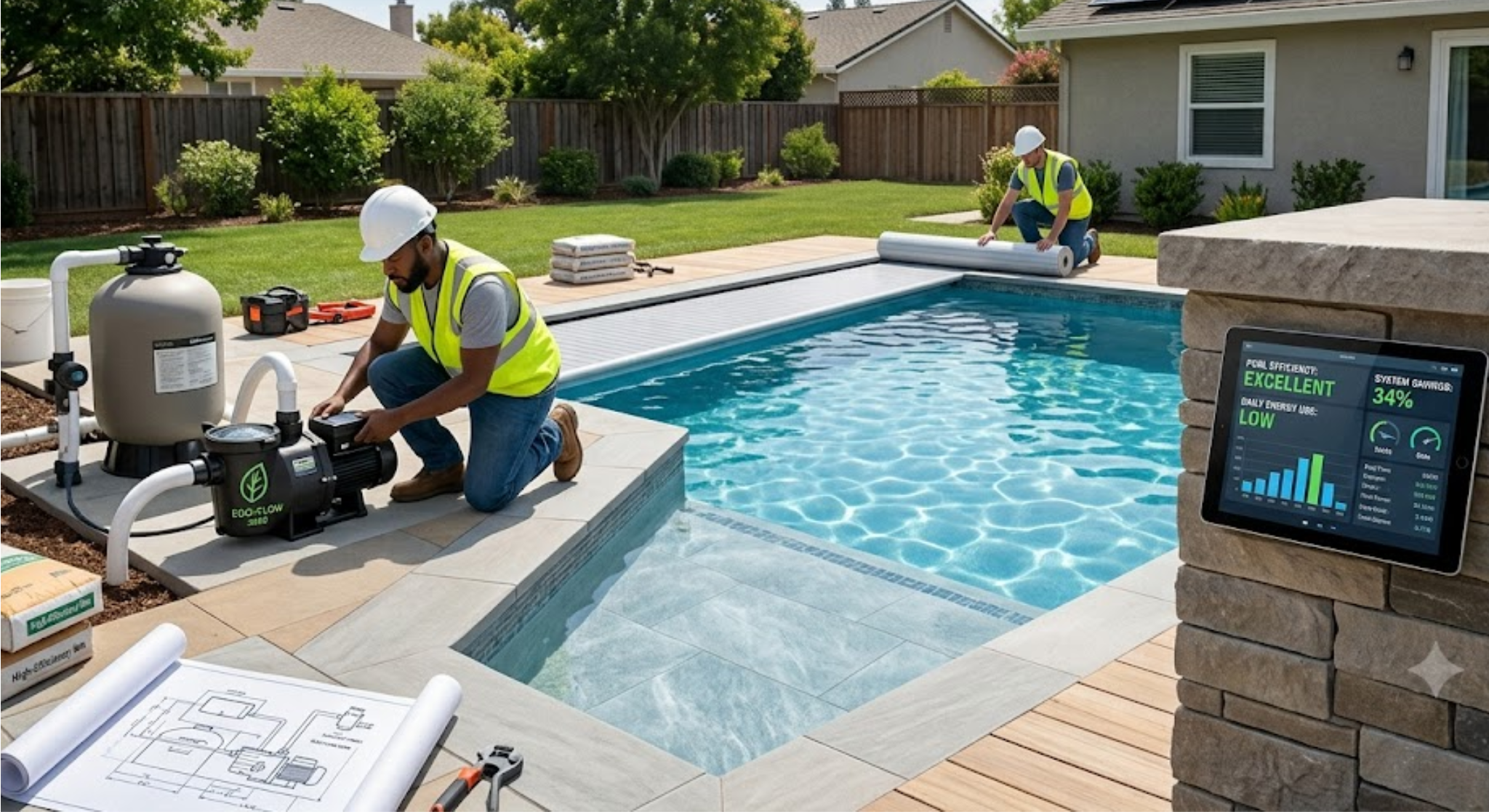

For homeowners across Central Texas, a backyard swimming pool is the ultimate summer sanctuary. However, operating an outdated pool system can quietly turn into an expensive endeavor. Older single-speed pumps, power-hungry incandescent lights, inefficient filtration systems, and worn plaster surfaces drain unnecessary electricity, waste water, and demand constant chemical dosing.
When considering an outdoor refresh, many property owners view a pool remodel purely through an aesthetic lens focusing on new waterline tiles or quartz plaster finishes. Yet, integrating modern equipment upgrades into your project offers a powerful opportunity to maximize operational performance.
Upgrading your pool setup transforms a high-maintenance expense into an eco-friendly asset that pays for itself over time.
1. Upgrading to Variable-Speed Pool Pumps
The circulation pump is the heart of your pool’s mechanical system. Legacy pools built over a decade ago typically rely on traditional single-speed pumps. These older units operate at a constant, maximum RPM whenever they are turned on consuming immense amounts of electricity regardless of whether the pool requires heavy filtration or basic water circulation.
[ Single-Speed Pump ] ──► Runs at 100% Capacity Constantly ──► High Utility Bills & Motor Wear

[ Variable-Speed Pump ] ──► Automatically Adjusts RPM/Flow  ──► Up to 70% Energy Savings
Why Variable-Speed Pumps Win:
- Targeted Flow Control: Variable-speed pumps utilize magnet motors that allow you to dial in exact speeds for specific tasks (low speed for daily filtration, higher speeds for vacuuming or running water features).
- Substantial Energy Savings: Running a pump at half speed uses only a fraction of the power required at full speed due to affinity laws of fluid dynamics. This single upgrade can reduce filtration energy costs by up to 50% to 70%.
- Quieter Operation & Longer Lifespan: Because variable-speed motors operate at lower RPMs during routine daily cycles, they generate far less noise and experience significantly less mechanical wear over their operational lifespan.
2. Transitioning to Long-Lasting LED Lighting
Traditional halogen or incandescent pool floodlights consume substantial energy and require frequent bulb replacements that involve draining water levels or breaking underwater seals.
Modern color-changing LED pool lights revolutionization illumination in several key ways:
- Extreme Energy Efficiency: High-output LED fixtures use up to 80% to 90% less electricity than legacy incandescent bulbs while producing brighter, more uniform underwater illumination.
- Extended Lifespan: Quality LED fixtures are rated for 30,000 to 50,000 continuous hours, eliminating the hassle of frequent burnouts.
- Dynamic Visual Ambience: LED systems offer customizable color palettes and pre-programmed light shows controlled directly from a smartphone app.
3. Optimizing Filtration and Chemical Automation
Achieving crystal-clear water balance shouldn’t require manual chemical pouring every few days. Upgrading your filtration system and adding automated sanitation equipment during a renovation simplifies water care while protecting your plaster investment.
┌─────────────────────────────────────────────────────────────────────────────┐
│                 EFFICIENCY COMPARISON: MODERN vs. LEGACY SYSTEMS            │
├──────────────────────────────┬──────────────────────────────────────────────┤
│ System Component             │ Efficiency Advantage                         │
├──────────────────────────────┼──────────────────────────────────────────────┤
│ **Cartridge / Media Filters**│ Eliminates frequent backwashing; conserves   │
│                              │ thousands of gallons of treated water yearly. │
├──────────────────────────────┼──────────────────────────────────────────────┤
│ **Saltwater Chlorinators**   │ Generates pure chlorine automatically from   │
│                              │ natural salt; prevents harsh chemical spikes.│
├──────────────────────────────┼──────────────────────────────────────────────┤
│ **Smart Automation Hubs**    │ Optimizes run times based on real-time weather│
│                              │ data and seasonal heating requirements.      │
└──────────────────────────────┴──────────────────────────────────────────────┘
By switching from traditional sand filters to large-capacity cartridge filters, you eliminate the need to backwash. This saves thousands of gallons of chemically treated water each season, easing municipal water demand during hot Texas summers.
4. Modernizing Plaster and Surface Finishes
The interior surface of your pool does more than hold water; its texture and density affect chemical absorption, circulation dynamics, and heat retention.
[ Rough, Degraded Plaster ] ──► Traps Algae & Debris ──► Requires Excessive Chemical Shock

[ Smooth Quartz / Pebble ]  ──► Non-Porous Shield    ──► Fast Brushing & Balanced Chemistry
Over time, aging plaster becomes porous, rough, and etched from mineral buildup. This rough surface creates microscopic pockets where algae spores take root, requiring higher chlorine concentrations and frequent chemical shock treatments to maintain water clarity.
Upgrading to smooth, modern quartz or aggregate finishes (such as pebble blends) creates a non-porous barrier. Smooth finishes resist algae attachment, making routine wall brushing faster and reducing ongoing chemical demand.
Balancing Efficiency Gains Against Pool Remodeling Cost in Austin
When planning an outdoor transformation, understanding how equipment upgrades offset upfront project costs is crucial. While high-efficiency pumps, automation modules, and premium aggregate finishes carry a higher initial purchase price, the long-term utility savings offset the investment over time.
| Investment Focus Area | Upfront Cost Profile | Long-Term Operational Savings |
| Variable-Speed Pump Upgrade | Moderate upfront investment. | Recovers costs in 18 to 24 months through reduced electric bills. |
| LED Automation Lighting | Low-to-moderate investment. | Long lifespan; minimal power draw compared to halogen systems. |
| Pebble / Quartz Resurfacing | Premium surface investment. | Extends surface life to 15+ years while reducing chemical demand. |
| Cartridge Filter Conversion | Moderate equipment cost. | Cuts water waste from backwashing; protects equipment longevity. |
Consulting with local specialists like Clear Solutions allows you to structure a renovation scope that balances aesthetic desires with practical energy goals, ensuring every dollar spent delivers maximum functional value.
Conclusion
A pool renovation is much more than a cosmetic makeover it is an opportunity to engineer a smarter, cleaner, and far more cost-effective outdoor living space. By replacing outdated equipment with variable-speed pumps, LED lighting, automated filtration, and durable aggregate finishes, you can enjoy crystal-clear water while keeping monthly utility costs under control.
Ready to explore how an efficiency-focused renovation can transform your backyard? Partner with the experts at Clear Solutions to evaluate equipment options, review detailed project estimates, and craft a personalized plan for your pool.
Frequently Asked Questions (FAQ)
Q: How much money can a variable-speed pool pump save on electric bills?
A: Depending on local electric utility rates and daily circulation run times, switching from a single-speed pump to an ENERGY STAR® certified variable-speed pump can save homeowners $300 to $700+ per year in electricity costs.
Q: Will a salt chlorine generator work with my existing pool plumbing?
A: Yes. Saltwater chlorination cells are easily integrated into existing return plumbing lines during a pool renovation project. They automate chlorine production and create softer, gentler water for swimmers.
Q: How often does high-efficiency cartridge filter equipment need to be cleaned?
A: Unlike sand filters that require backwashing every few weeks, large-capacity cartridge filters typically only require deep cleaning 2 to 4 times per year, depending on pool size and surrounding foliage.