

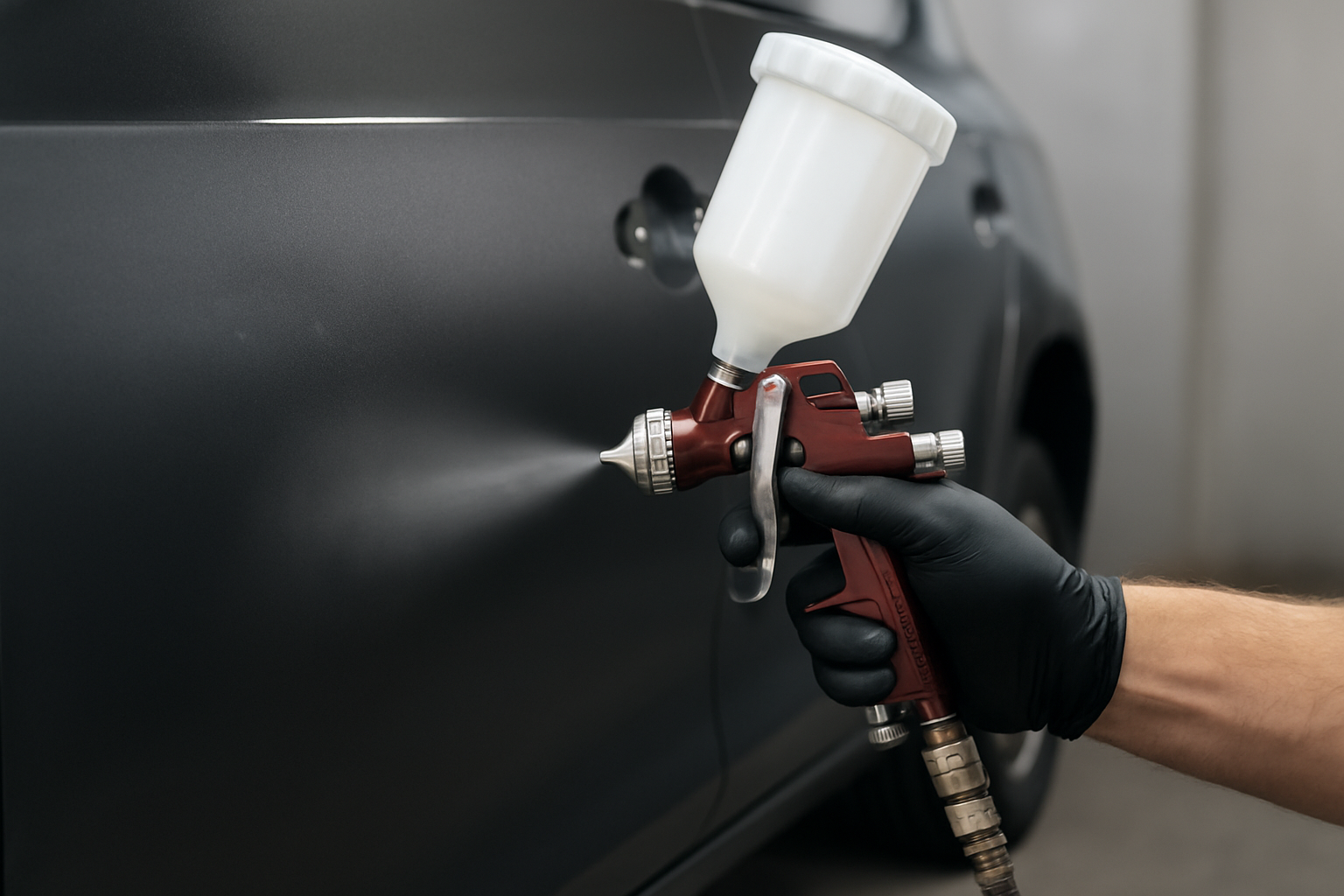

Understanding what an automotive basecoat does
The basecoat is the layer that provides color and visual depth in a vehicle’s paint system. It sits between the primer and the clear coat, acting as the visual foundation of your finish. Automotive basecoats are typically solvent-based or water-based, each with distinct performance benefits.
A high-quality basecoat ensures smooth color distribution, consistent coverage, and compatibility with clear coats. When chosen correctly, it enhances gloss and depth, helping your car look new for years.
Solvent-based vs. water-based basecoats
Solvent-based basecoats have long been the industry standard because of their fast drying times and ease of application. However, they contain volatile organic compounds (VOCs), which have led to environmental regulations limiting their use in many regions.
Water-based basecoats are now more common in professional auto body shops. They are environmentally friendly, emit fewer fumes, and offer excellent color accuracy. They take slightly longer to dry but often produce more consistent metallic and pearl finishes. If your project is being done at home, check local guidelines for which type is permitted.
Matching your vehicle’s color accurately
Choosing the correct color is not as simple as selecting one from a paint chip. Most vehicles have specific paint codes printed on an identification plate inside the engine bay or door jamb. You can use this code to order an exact color match from suppliers offering automotive base coat paint for sale.
For older vehicles, sun exposure and wear may have altered the original color slightly. In that case, a professional color match service can create a custom blend to ensure seamless integration between new and existing panels.
Considering finish types and effects
Automotive basecoats come in several finish options, including solid, metallic, pearl, and matte. Each creates a distinct look and requires unique handling:
- Solid basecoats deliver a classic, uniform color ideal for everyday vehicles.
- Metallic basecoats include tiny metal flakes that reflect light, producing a sparkling effect.
- Pearl basecoats use mica particles for a subtle iridescent sheen.
- Matte finishes are popular in modern design but require specialized care and maintenance.
Your choice depends on the desired aesthetic and maintenance commitment. Metallic and pearl finishes, for example, require careful application to avoid striping or patchiness.
Evaluating quality and brand reputation
Not all basecoats are created equal. Low-cost products often compromise on pigment concentration, leading to poor coverage and fading over time. Leading brands like PPG, BASF, and Axalta offer durable, high-quality coatings that maintain color integrity and resist UV damage. Before purchasing, read the product’s technical data sheet to confirm compatibility with your chosen clear coat and primer.
If you’re searching online, ensure the vendor provides temperature and humidity application guidelines. Look for professional suppliers with verified reviews and authentic product listings.
Preparing for application
Proper preparation is essential to get the best from your basecoat. The vehicle’s surface should be clean, sanded, and primed. Any grease or dust can affect adhesion. Once the primer is cured and sanded smooth, apply the basecoat in thin, even layers. Allow sufficient flash time between coats, usually 10 to 15 minutes, depending on humidity and temperature.
Always finish with a compatible clear coat to protect the color and add gloss. Without it, even the best basecoat can fade prematurely.
Common mistakes to avoid
- Skipping the primer: Basecoats require a stable surface to bond correctly.
- Using incompatible products: Always match the basecoat, primer, and clear coat from the same system.
- Poor surface cleaning: Even fingerprints can cause uneven finishes.
- Rushing the drying process: Insufficient flash time can lead to solvent popping or dull spots.
- Ignoring environmental conditions: Temperature and humidity directly affect the final result.
Where to buy quality basecoats
Reputable suppliers and automotive refinish stores offer certified products that meet OEM standards. Online marketplaces may advertise automotive base coat paint for sale, but always verify that the product is new, unopened, and stored under correct conditions.
For professional-grade results, many auto body professionals source materials from established distributors or local paint supply stores that can mix exact color codes on-site.
Maintaining your vehicle’s paint finish
Once the paint job is complete, maintenance becomes key. Wash the vehicle with pH-balanced automotive soap and avoid harsh chemicals. Apply wax or ceramic coatings periodically to preserve gloss and prevent UV damage. If chips or scratches occur, repair them promptly to avoid moisture infiltration.
The long-term impact of choosing the right basecoat
Investing in a high-quality automotive basecoat pays off in both appearance and longevity. A well-selected and properly applied basecoat provides better adhesion, enhanced color vibrancy, and resistance to fading or peeling. For restorations, custom builds, or simple touch-ups, the right product and process ensure your car retains its showroom finish for years.
FAQs
What is an automotive basecoat?
It’s the layer of paint that provides color and depth beneath the clear coat. It doesn’t contain gloss but determines the vehicle’s visual tone.
Can I apply a basecoat myself?
Yes, if you have proper ventilation, safety gear, and spraying equipment. However, professional application often yields a smoother, longer-lasting finish.
How long should a basecoat dry before clear coating?
Most basecoats need 15–30 minutes of flash time between coats and at least 30–60 minutes before clear coat application.
Is water-based paint better than solvent-based?
Water-based paint is more environmentally friendly and produces accurate color matches, while solvent-based options dry faster and are more forgiving for beginners.
How do I find my vehicle’s paint code?
Check the manufacturer’s label, usually located inside the door jamb, glove box, or engine bay. You can also contact your dealer with the VIN.
Can I mix basecoats from different brands?
Mixing brands is not recommended, as different formulas may react and cause adhesion or color issues.
How do I maintain a freshly painted surface?
Wait 30 days before waxing or sealing. Use mild car wash soap and microfiber cloths to prevent scratches.