

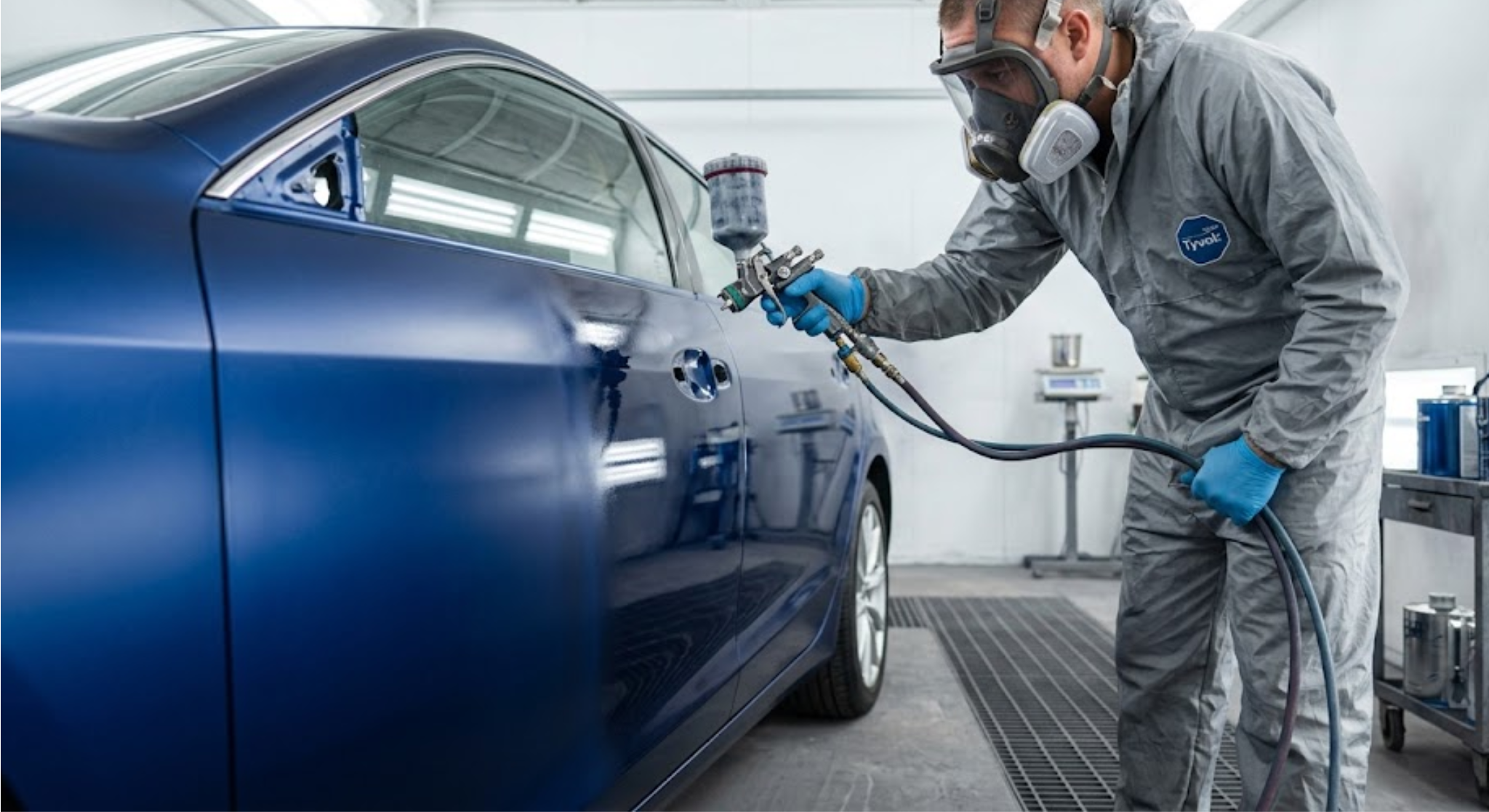

When gazing at a modern vehicle gleaming under direct sunlight, it is easy to admire its deep reflection and rich color. However, what appears to be a single layer of shiny paint is actually a carefully engineered, multi-stage coating system designed to withstand extreme environmental stress.
The shift from old-fashioned single-stage enamels to modern multi-stage (base coat/clear coat) paint systems revolutionized the automotive refinishing industry. By separating visual color from surface protection, paint manufacturers unlocked unprecedented color depth, vibrant metallic effects, and long-term finish durability.
Understanding how Auto Base Coat Paint interacts chemically and mechanically with clear coat topcoats is essential for professional autobody painters, restoration enthusiasts, and DIY technicians alike. Base coat works together with clear coat for durability.
Here is a detailed, technical look at how base coats and clear coat systems work together to deliver a beautiful, long-lasting automotive finish.
1. The Anatomy of a Two-Stage Automotive Paint System
To understand how base coat and clear coat function as a team, it helps to examine the layered structure of modern vehicle paint:
[ Clear Coat Topcoat ]   ──► High Gloss, UV Protection & Scratch Resistance

[ Auto Base Coat Paint ] ──► Color Pigment, Metallic Flakes & Visual Depth

[ Primer Surfacer ]      ──► Corrosion Prevention & Smooth Substrate Leveling
- The Primer / Undercoat Layer: Seals the underlying metal or plastic body panel, prevents rust, and provides a smooth, uniform surface for paint application.
- The Base Coat Layer: Contains the color pigments, effect flakes (metallic or mica pearls), and specialized binders. It dries to a flat, non-glossy finish.
- The Clear Coat Layer: A transparent, high-solid polyurethane or acrylic resin that provides high-gloss shine, UV absorption, and chemical resistance.
While the base coat provides visual identity, the clear coat acts as an armor shell that protects those delicate color pigments from fading, oxidation, and road debris.
2. Chemical and Mechanical Intercoat Adhesion
One of the most critical aspects of a two-stage system is intercoat adhesion—the bond formed between the base coat and the clear coat. If these two layers fail to bond properly, the clear coat will eventually bubble, crack, or peel off in sheets (a defect known as delamination).
┌─────────────────────────────────────────────────────────────────────────────┐
│                    MECHANISMS OF INTERCOAT ADHESION                         │
├──────────────────────────────┬──────────────────────────────────────────────┤
│ Bonding Mechanism            │ Operational Action                           │
├──────────────────────────────┼──────────────────────────────────────────────┤
│ **Mechanical Interlocking**  │ Base coats dry with a microscopic, slightly  │
│                              │ porous texture that clear coat bites into.   │
├──────────────────────────────┼──────────────────────────────────────────────┤
│ **Chemical Cross-Linking**   │ Solvents in the liquid clear coat bite into  │
│                              │ the un-cured base coat binders beneath.      │
└──────────────────────────────┴──────────────────────────────────────────────┘
For optimal bonding, painters must apply clear coat within a specific time window typically after the base coat flashes to a matte finish (10–15 minutes), but before the base coat fully cures hard (usually within 24 hours).
3. Protecting Metallic and Pearlescent Particles
Specialty finishes such as metallic silver, deep pearl blues, or color-shifting chameleon paints rely on microscopic aluminum flakes or mica synthetic crystals suspended within liquid Auto Base Coat Paint.
[ Base Coat Suspension ] ──────► Flakes Orient Parallel ──────► Clear Coat Seal Prevents Oxidation
- Flake Orientation: Premium base coat formulations keep reflective particles suspended evenly so they lay flat parallel to the body panel, preventing dark stripes or mottling.
- Oxidation Shielding: Bare aluminum particles inside metallic paint would quickly corrode and dull if exposed to air and moisture. The clear coat seals these metallic flakes completely, preserving their brilliant sparkle for years.
4. The Critical Function of UV Absorbers and Clear Coat Gloss
While base coats give a vehicle its distinct hue, color pigments are inherently vulnerable to solar damage. Ultraviolet (UV) radiation breaks down chemical bonds inside paint pigments, causing bright reds, blues, and blacks to fade or chalk over time.
[ Sunlight UV Radiation ] ──► Filtered by UV Absorbers in Clear Coat ──► Base Coat Pigments Preserved
Modern clear coats are fortified with specialized chemical additives:
- UV Absorbers (UVAs): Act like sunscreen, converting harmful UV rays into harmless thermal energy before they reach the base coat pigments below.
- Hindered Amine Light Stabilizers (HALS): Trap free radicals formed by sunlight, preventing the clear coat resin itself from yellowing or breaking down.
Because the clear coat carries all the protective shine and UV blockers, the underlying color layer remains vibrant and unfaded for the lifetime of the vehicle.
5. Application Best Practices for Seamless System Synergy
To achieve a flawless factory-quality finish when spraying base coat and clear coat systems, technicians must adhere to key environmental and technical parameters:
| Stage / Parameter | Recommended Application Standard | Purpose & Benefit |
| Base Coat Spraying | 2 to 3 medium coats with 10–15 min flash times | Achieves full color hiding without solvent trapping. |
| Drop Coat (For Metallics) | Light pass at lower pressure and increased distance | Randomizes metallic flakes to prevent tiger striping. |
| Flash-Off Inspection | Wait until base coat dries completely matte | Ensures solvents evaporate before sealing with clear coat. |
| Clear Coat Application | 2 full wet coats with correct activator reducer | Delivers high-gloss film build and maximum UV barrier. |
Conclusion
The partnership between auto base coat paint and clear coat systems represents one of the greatest technological advancements in modern refinishing. By dividing responsibilities allowing the base coat to handle color accuracy while the clear coat delivers structural protection and brilliant gloss this two-stage process ensures vehicles look stunning and withstand daily exposure to sun, rain, and road debris.
Ready to explore high-performance paint systems engineered for maximum depth, durability, and smooth application? Partner with the refinishing experts at Automotive Base Coat to find the ideal paint products for your next automotive restoration or repair project.
Frequently Asked Questions (FAQ)
Q: Can I apply clear coat directly over single-stage paint?
A: While you can spray clear coat over cured single-stage paint after scuffing it with a fine sanding pad, true multi-stage systems perform best when using a base coat specifically formulated to bond chemically with clear coats.
Q: What happens if I wait too long to apply clear coat over base coat?
A: If you exceed the maximum recoat window (usually 24 hours), the base coat will cure completely smooth, preventing proper chemical and mechanical adhesion. In this scenario, you must lightly scuff the base coat and apply one fresh coat of base before spraying clear.
Q: Does base coat have any gloss on its own?
A: No. Base coat paint dries to a flat, dull matte finish. All of the rich, high-gloss shine and depth seen on a finished vehicle comes from the protective clear coat topcoat.