

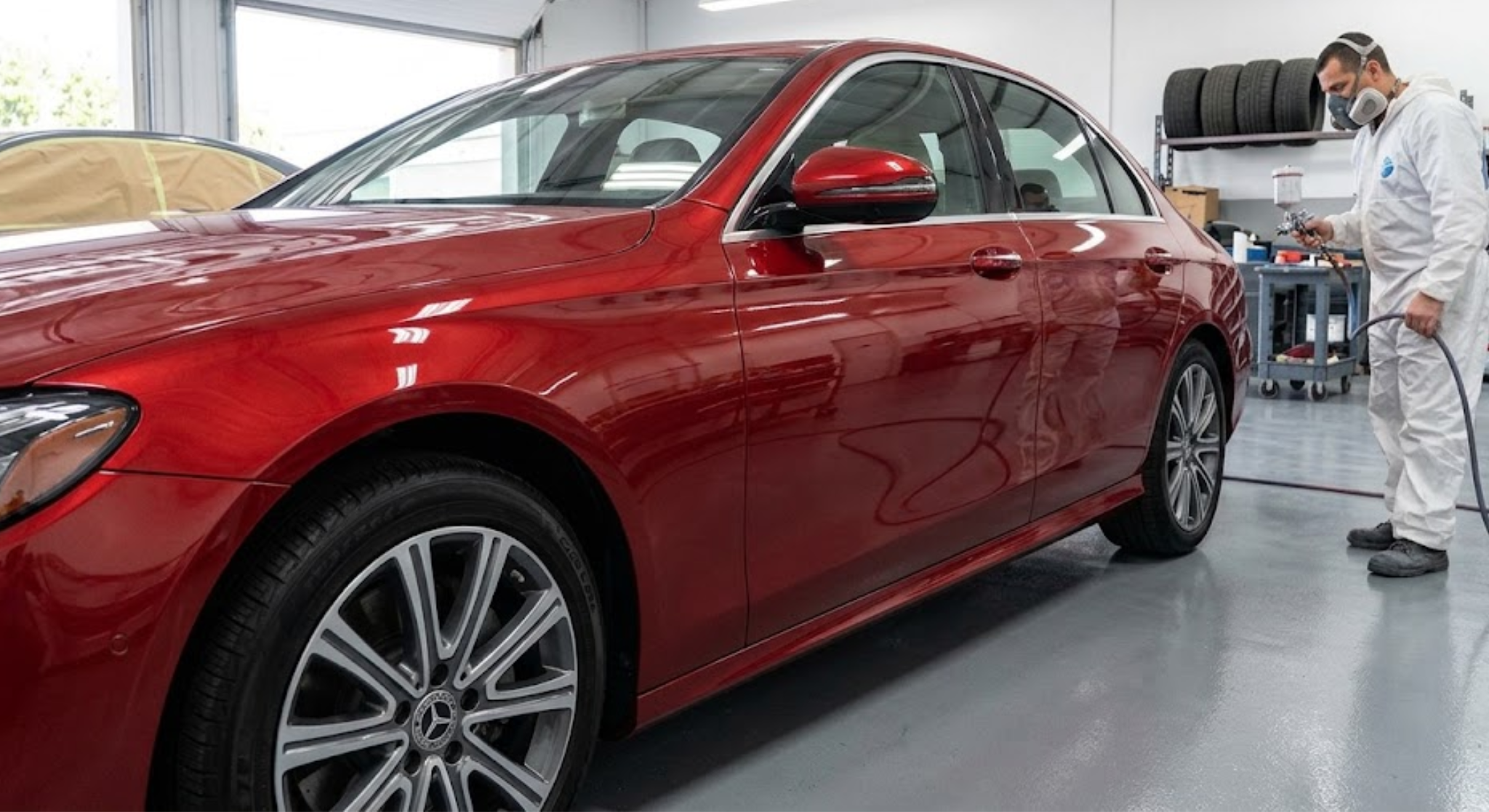

Achieving seamless color consistency across every panel of a vehicle is one of the most demanding challenges in collision repair and custom automotive refinishing. Whether blending a newly replaced door into an existing fender or executing a full-body respray on a classic restoration, any subtle variance in shade, metallic flake orientation, or film build immediately catches the eye under direct sunlight.
Discrepancies between adjacent panels often referred to as panel mismatch or mottling instantly diminish a vehicle’s aesthetic appeal and resale value. The secret to achieving an invisible transition lies in the chemistry and application of modern two-stage coating systems.
By separating color pigments from topcoat clear coat protection, modern basecoats give refinish technicians total control over hue, opacity, and flake distribution. Basecoat ensures uniform color application.
Here is an in-depth guide from the refinishing specialists at Automotive Basecoat exploring how high-performance basecoat formulations drive color consistency across vehicle panels and how to master blending techniques in your shop.
1. High Pigment Loading and Controlled Film Build
Legacy single-stage enamels required heavy, wet coats to build both color depth and surface gloss simultaneously. This dual requirement often led to uneven material pooling along panel edges, run lines, and noticeable color shifts between horizontal and vertical surfaces.
[ High Pigment Concentration ] ──► Uniform Micro-Film Layer ──► Fast Opacity Without Heavy Material Build
Advantages of Modern Basecoat Engineering:
- Rapid Opacity: Engineered with high concentrations of finely milled color pigments, quality basecoats achieve complete coverage (hiding power) in just 2 to 3 thin, medium-wet passes.
- Controlled Layering: Thin, predictable film builds eliminate material sag along body lines and prevent dark edges along panel margins.
- Consistent Light Reflection: Maintaining an even film thickness across adjacent doors, quarter panels, and hoods ensures light refracts identically across the entire side profile of the vehicle.
2. Stabilizing Metallic and Pearlescent Particles Across Surfaces
Metallic and pearlescent finishes contain suspended aluminum flakes or coated mica particles. Achieving panel-to-panel consistency with these special-effect coatings requires keeping these particles suspended evenly without allowing them to sink or cluster.
┌─────────────────────────────────────────────────────────────────────────────┐
│                   METALLIC FLAKE STABILIZATION IN BASECOATS                 │
├──────────────────────────────┼──────────────────────────────────────────────┤
│ Physical Mechanism           │ Color Consistency Result                     │
├──────────────────────────────┼──────────────────────────────────────────────┤
│ **Controlled Viscosity**     │ Holds metallic flakes in place upon impact,   │
│                              │ preventing clumping or heavy pooling.        │
├──────────────────────────────┼──────────────────────────────────────────────┤
│ **Predictable Flash Times**   │ Allows solvents to leave the film evenly,    │
│                              │ locking flakes in a flat horizontal plane.   │
├──────────────────────────────┼──────────────────────────────────────────────┤
│ **Drop-Coat Alignment**      │ Enables a light mist pass to even out flake  │
│                              │ distribution across panel blends.            │
└──────────────────────────────┴──────────────────────────────────────────────┘
When metallic flakes dry in a consistent orientation across every panel, the vehicle displays a uniform flop (the color shift observed when viewing the paint from different angles) with zero mottling or tiger-striping.
3. Mastering Panel Blending Techniques for Invisible Transitions
Even with computer-matched color formulas, minor variations in spray gun distance, air pressure, or ambient temperature can cause slight shade shifts when painting an isolated panel. Professional refinishers rely on panel blending to trick the human eye.
[ Fully Covered Repair Zone ] ──► Feathered Blend Zone ──► Unbroken Factory Clear Coat Transition
- Preparing the Blend Panel: Scuff the adjacent original panel with fine abrasive pads ($P2000\text{ to }P3000\text{ grit}$) and prep paste to ensure mechanical adhesion without scratching through the factory basecoat.
- Feathering the Color Edge: Apply the matched basecoat over the repaired section, then extend each successive coat slightly further onto the adjacent panel using a wrist-flick motion.
- Applying Wet-Bed Blenders: Utilizing a transparent basecoat blender or wet-bed on the receiving panel allows color pigments to melt seamlessly into the clear layer without forming harsh dry-spray lines.
4. Temperature-Matched Reducers and Spray Environment Controls
Solvent evaporation speed directly influences how paint droplets land and flow together across panel boundaries. Using the wrong reducer speed for your shop temperature causes noticeable color shifts.
| Shop Temperature Range | Reducer Selection | Spray Application Effect |
| Cool ($60^\circ\text{F} – 70^\circ\text{F}$) | Fast Reducer | Accelerates flash-off; prevents runs on vertical panel transitions. |
| Moderate ($70^\circ\text{F} – 80^\circ\text{F}$) | Medium Reducer | Delivers ideal flow and leveling across both doors and fenders. |
| Warm/Hot ($85^\circ\text{F}+$) | Slow / Extra-Slow Reducer | Keeps wet edges open, preventing dry spray lines on large panels like hoods. |
Matching your reducer to ambient booth temperatures guarantees that the basecoat atomizes, flows out, and dries at the exact same rate across all sprayed surfaces.
5. Spray Gun Calibration and Uniform Distance Control
Achieving consistent color across panels requires maintaining precise spray gun mechanics throughout the entire pass.
- Overlap Technique: Maintain a strict $50\%\text{ to }75\%$ pattern overlap from pass to pass across panel seams.
- Perpendicular Angle: Keep the spray gun at a right angle ($90^\circ$) to the panel surface. Tilting the gun (arcing) creates thin, dry edges that alter metallic orientation.
- Regulated Air Pressure: Set the spray gun inlet pressure precisely according to technical data sheet ($TDS$) specifications to ensure uniform fluid atomization.
Conclusion
Uniform color consistency across vehicle panels is the ultimate mark of refinishing excellence. By leveraging modern basecoat chemistry featuring high pigment density, stable metallic suspension, and controlled film thickness technicians can execute flawless panel blends and full resprays with complete confidence.
Looking to achieve seamless color matches and superior coverage on your next automotive refinishing project? Explore premium basecoat lines, custom color matches, and technical spray supplies at Automotive Basecoat today.
Frequently Asked Questions (FAQ)
Q: Why does my metallic basecoat look darker on a vertical door than on a horizontal hood?
A: This effect known as “flop” occurs when metallic flakes align differently due to gravity, spray angle, or solvent evaporation rates. Applying a light “control coat” (drop coat) helps align flakes uniformly across both orientation planes.
Q: What is a wet-bed blender and how does it help panel matching?
A: A wet-bed blender is a clear, unpigmented basecoat resin applied to the adjacent blend panel before spraying color. It creates a smooth, receptive wet layer that helps feathered overspray melt cleanly into the surface without creating dry dust lines.
Q: How many coats of basecoat are needed for consistent color coverage?
A: Most quality basecoats achieve complete coverage and uniform color depth in 2 to 3 thin, medium-wet coats, followed by an optional drop coat for metallic or pearl finishes.