

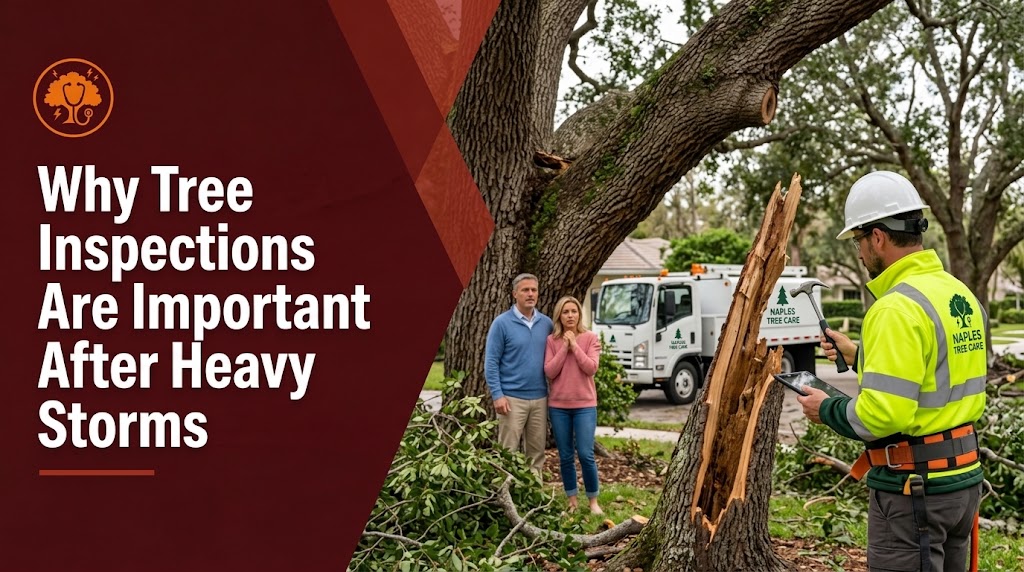

Heavy storms can leave behind more than fallen leaves and scattered branches. Strong winds, heavy rain, lightning, and saturated soil can affect the health and stability of trees in ways that are not always immediately visible. A tree may appear fine from the ground while having damaged limbs, weakened roots, or cracks that could become dangerous later.
For homeowners and property managers, scheduling a professional tree inspection after severe weather is an important step toward protecting people, buildings, vehicles, and landscaping. Identifying storm damage early can also make it easier to address problems before they become more expensive or hazardous.
Storms Can Cause Hidden Tree Damage
One of the biggest reasons to inspect trees after a storm is that damage is not always obvious. A large branch may remain attached even though it has developed a dangerous crack. Roots may have shifted beneath the soil, while the trunk may have internal damage that cannot be seen from a distance.
Strong winds can place tremendous pressure on branches and trunks. Heavy rain can saturate the soil, reducing its ability to hold roots securely. Lightning can also split bark, damage internal tissues, or create weak points that develop over time.
A professional inspection can help identify these issues before they result in a sudden failure.
Why Tree Inspections After Heavy Storms Matter
Tree inspections after heavy storms are important because wind and rain can weaken branches, shift roots, or create hidden cracks in the trunk. Having trees checked after severe weather can help prevent future property damage or safety risks.
Even when a tree remains standing, storm-related damage may continue to develop. A cracked branch can eventually fall during another windy day. A leaning tree can become increasingly unstable if its roots have been disturbed. Early detection gives property owners an opportunity to address these concerns before they become emergencies.
Common Signs of Storm Damage
After severe weather, homeowners should look for several warning signs. However, inspecting trees from the ground should not replace an evaluation by a qualified professional, especially when damage is high in the canopy.
Broken or Hanging Branches
Branches that are broken, partially detached, or hanging unusually low can pose serious hazards. They may fall without warning, particularly during additional wind or rain.
Cracks in the Trunk or Major Limbs
Fresh cracks in the trunk or large branches can indicate structural weakness. Cracks may become more serious over time as the tree continues to experience movement and environmental stress.
Leaning Trees
A tree that suddenly begins leaning after a storm deserves immediate attention. A change in position can indicate root damage or soil movement, particularly when the ground is saturated.
Exposed or Damaged Roots
Heavy rain and strong winds can disturb the soil around a tree’s root system. Exposed roots, lifted soil, or broken roots may reduce stability and increase the risk of tree failure.
Missing Bark
Storms can strip bark from branches and trunks. Large areas of missing bark can expose internal tissues and create opportunities for insects, fungi, and disease to affect the tree.
Split or Broken Tree Crowns
The upper portion of a tree can suffer significant damage during high winds. Broken leaders, split branches, and uneven crowns may affect both the tree’s appearance and structural balance.
Storm Damage Can Affect Property Safety
Damaged trees can create risks for homes, garages, fences, power lines, vehicles, and outdoor structures. A weakened branch positioned above a roof or driveway may become a major hazard during the next storm.
Trees located near frequently used areas deserve particular attention. A professional can evaluate whether damaged limbs should be pruned, whether additional support is appropriate, or whether removal may be necessary in severe cases.
Taking action early can reduce the likelihood of costly emergency repairs.
Professional Inspections Help Identify Structural Problems
Professional tree inspections involve more than simply looking for broken branches. An experienced tree professional can assess the overall condition of the tree, including the trunk, major limbs, canopy, root zone, and surrounding soil.
The inspection may help determine whether the tree can recover naturally or whether corrective pruning and other treatments are needed. In more serious situations, the professional may recommend removing a hazardous tree to protect nearby people and property.
This evaluation is particularly valuable for large mature trees because storm damage at greater heights can be difficult and dangerous for homeowners to assess themselves.
When Should You Schedule an Inspection?
It is generally wise to arrange an inspection as soon as practical after a major storm, especially if your property experienced strong winds, flooding, lightning, or prolonged heavy rain.
An inspection becomes even more important if you notice a tree leaning, large branches on the ground, fresh cracks, exposed roots, hanging limbs, or unusual movement.
Trees that appear healthy should not automatically be considered safe. Some structural problems may become noticeable only after the storm has passed.
How Regular Inspections Protect Trees
Post-storm inspections are not only about preventing immediate hazards. They can also help preserve tree health over the long term.
Storm wounds can provide entry points for insects and fungal organisms. Broken branches may develop decay if they are not properly addressed. Root damage can also affect a tree’s ability to absorb water and nutrients.
By identifying these issues early, property owners can take appropriate steps to support recovery and maintain healthy growth.
FAQs About Post-Storm Tree Inspections
How soon should trees be inspected after a heavy storm?
Trees should be checked as soon as it is safe to access the property after severe weather. Prompt inspections can identify dangerous branches, root instability, and other structural concerns before additional damage occurs.
Can a tree look healthy but still be dangerous?
Yes. Some cracks, root problems, and internal structural defects are difficult to see from the ground. A tree can have hidden damage even when its leaves and overall appearance seem normal.
Should I remove broken branches myself?
Small branches that are safely reachable may sometimes be handled by homeowners, but large, cracked, hanging, or elevated branches should be left to trained professionals. Attempting to remove heavy storm-damaged limbs can result in serious injury or additional property damage.
Does every storm-damaged tree need to be removed?
No. Many trees can recover after storm damage with proper pruning and care. Removal is generally considered when a tree has severe structural problems, extensive damage, significant root instability, or poses an unacceptable safety risk.
Why are wet soils a concern after heavy rain?
Saturated soil can provide less support for tree roots. Combined with strong winds, this may increase the possibility of leaning or uprooting, particularly for trees that already have compromised root systems.
Conclusion
Heavy storms can affect trees in ways that are visible and hidden. Broken limbs, cracked trunks, exposed roots, leaning trees, and damaged crowns can create immediate safety concerns, while less obvious damage may lead to problems weeks or months later.
Scheduling a professional inspection after severe weather is a practical way to identify potential hazards and determine what action is needed. Whether a tree requires pruning, monitoring, support, or removal, early attention can help protect your property while giving healthy trees the best opportunity to recover.