

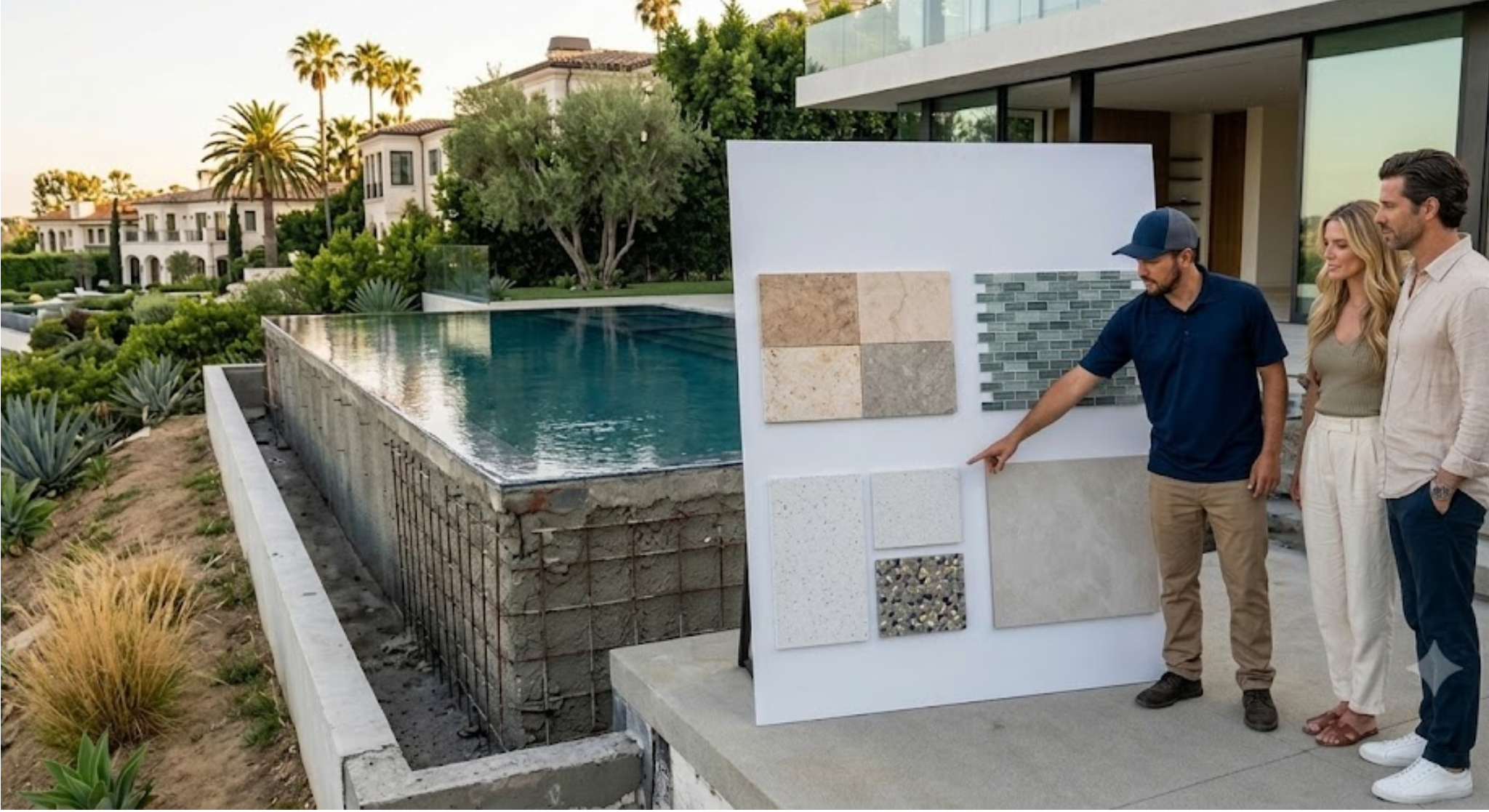

Southern California is renowned for its enviable Mediterranean climate, characterized by warm, sun-drenched summers and mild, clear winters. While this weather makes Beverly Hills an ideal location for year-round outdoor entertaining, the local environment presents unique challenges for hardscape and pool materials.
Continuous exposure to intense ultraviolet (UV) radiation, thermal expansion from warm days and cool canyon nights, and chemical exposure from pool sanitation systems can wear down inferior building supplies. Selecting cheap or improper finishes often leads to fading, cracking, surface erosion, and frequent repairs.
To protect your property investment and maintain a flawless aesthetic, material selection must be guided by durability, thermal resistance, and architectural harmony. Working with experienced Pool Contractors Beverly Hills helps homeowners achieve pool designs that match their lifestyle, architecture, and long-term property goals.
Here is a comprehensive guide to choosing swimming pool and decking materials engineered to withstand the Beverly Hills climate.
1. Pool Decking: Balancing Heat Reflection and Durability
Your pool deck experiences heavy foot traffic, direct solar radiation, and constant water splashes. Choosing decking materials that reflect heat, resist slip hazards, and prevent cracking is essential for long-term comfort and safety.
┌─────────────────────────────────────────────────────────────────────────────┐
│                       POOLED DECKING MATERIAL MATRIX                        │
├──────────────────────────────┬──────────────────────────────────────────────┤
│ Material Type                │ Key Characteristics & Weather Resilience     │
├──────────────────────────────┼──────────────────────────────────────────────┤
│ **Travertine Pavers**        │ Highly heat-reflective; remains cool under   │
│                              │ bare feet; naturally slip-resistant surface. │
├──────────────────────────────┼──────────────────────────────────────────────┤
│ **Architectural Concrete**   │ Highly customizable; requires proper expansion│
│                              │ joints to prevent thermal cracking.          │
├──────────────────────────────┼──────────────────────────────────────────────┤
│ **Porcelain Outdoor Pavers** │ Non-porous; highly resistant to fading, UV   │
│                              │ degradation, and chemical staining.          │
└──────────────────────────────┴──────────────────────────────────────────────┘
- Travertine & Natural Limestone: Natural light-colored travertine remains one of the top choices for luxury estates. Its porous structure dissipates heat quickly, keeping the surface comfortable during 90°F summer days while providing a slip-resistant texture.
- Outdoor Porcelain Pavers: Modern porcelain offers exceptional density and zero water absorption. It resists fading under intense Southern California sunlight and is completely immune to chemical discoloration from salt-chlorine generators.
2. Interior Pool Finishes: Resistance to Fading and Scaling
The interior finish defines the color of your pool water while providing the primary waterproof barrier for the shotcrete shell. High UV index levels can break down standard white plaster over time, leading to etching and discoloration.
[ Intense UV & Chemical Exposure ] ──► Standard Plaster Etching & Staining

[ Quartz Aggregate / Pebble Finish ] ──► High Chemical Density & 15+ Year Durability
High-Performance Interior Options:
- Exposed Pebble Aggregates: Utilizing smooth river pebbles or small granite stones creates a resilient interior finish. Aggregate surfaces resist chemical etching, mask minor water scale deposits, and last 15 to 20+ years with minimal maintenance.
- Quartz-Reinforced Plaster: Blending hard quartz crystals into traditional plaster increases resistance to chemical fluctuations and extends the surface lifespan significantly beyond standard finishes.
3. Waterline Tile and Coping: Stopping Thermal Shock
The waterline tile band and pool coping exist at the exact intersection of air, water, and direct sunlight. This high-stress zone experiences rapid thermal shifts as daytime heat cools down rapidly in hillside and canyon estates.
┌─────────────────────────────────────────────────────────────────────────────┐
│                    WATERLINE TILE RESILIENCE COMPARISON                     │
├──────────────────────────────┬──────────────────────────────────────────────┤
│ Tile Material                │ Weather & Chemical Resilience                │
├──────────────────────────────┼──────────────────────────────────────────────┤
│ **Glass Tile**               │ Zero porosity; impervious to chemical etching;│
│                              │ reflects sunlight into brilliant water hues. │
├──────────────────────────────┼──────────────────────────────────────────────┤
│ **Glazed Ceramic Tile**      │ Traditional choice; requires high-grade frost│
│                              │ proof glaze to prevent thermal crazing.      │
└──────────────────────────────┴──────────────────────────────────────────────┘
Pro Tip: Fully tiled glass pools or glass waterline borders represent the gold standard in Beverly Hills estate design. Non-porous glass tile will never absorb pool chemicals or water, preventing tile delamination and frost-cracking during cold winter nights.
4. Engineering for Hillside Topography and Soil Shift
Beverly Hills terrain ranges from flat residential parcels north of Sunset Boulevard to steep hillside lots across Trousdale Estates and canyon corridors. Hillside properties present unique structural challenges, including soil expansion, ground movement, and complex drainage requirements.
[ Hillside Geotechnical Survey ] ──► Deep Friction Caissons ──► Structural Shell Stability
To prevent material failure caused by subtle ground shifting, luxury custom builds on sloped lots require:
- Friction Caissons & Grade Beams: Anchoring the pool shell directly into solid bedrock prevents structural settling and deck separation.
- Sub-Deck Drainage Systems: Installing specialized drainage membranes beneath stone decks directs groundwater away from the pool structure, eliminating hydrostatic pressure risks.
Experienced builders like Pomer Pools work alongside geotechnical engineers to ensure the subterranean structure is as resilient as the visible surface finishes.
5. Equipment Pad Hardware Built to Withstand the Elements
The longevity of your outdoor space extends beyond stone and tile. High-efficiency mechanical hardware including pumps, heaters, and automation controllers must withstand outdoor UV exposure and corrosive marine air moving inland from the Pacific Ocean.
| Component | Standard Entry Option | Long-Lasting Estate-Grade Option |
| Pumps | Single-speed plastic housing | Heavy-duty variable-speed pumps with UV-resistant casings |
| Heaters | Standard copper heat exchangers | Cupro-nickel or titanium heat exchangers for high chemical resistance |
| Sanitation | Manual liquid chlorine feeding | Automated saltwater systems with self-cleaning electrolytic cells |
Investing in commercial-grade, marine-rated mechanical hardware ensures your filtration pad operates quietly and reliably year-round without sun-rot or corrosion.
Conclusion
Building a pool that maintains its beauty and structural integrity for decades requires a deliberate focus on material science and local weather dynamics. By choosing heat-reflective stone decking, UV-resistant aggregate or glass tile interiors, and corrosion-resistant mechanical hardware, you protect your home against the elements.
When you are ready to design or renovate a luxury estate pool tailored specifically to your property’s microclimate and architecture, trust the master craftsmen at Pomer Pools. Contact our team today to schedule a comprehensive design consultation.
Frequently Asked Questions (FAQ)
Q: Which pool decking material stays the coolest in hot Southern California summers?
A: Light-colored natural travertine and specialized light porcelain pavers remain significantly cooler underfoot than dark slate, stamped concrete, or dark brick, making them ideal for sunny pool decks.
Q: How long does a glass tile pool finish last compared to standard plaster?
A: High-quality glass tile can last 25 to 30+ years with proper water chemistry, whereas standard pool plaster typically requires resurfacing every 7 to 10 years due to chemical wear and UV fading.
Q: Do hillside pool builds in Beverly Hills require special material considerations?
A: Yes. Hillside sites require engineered concrete retaining structures, deep steel rebar grids, and specialized sub-deck drainage systems to prevent soil movement from damaging pool decking and coping joints.