
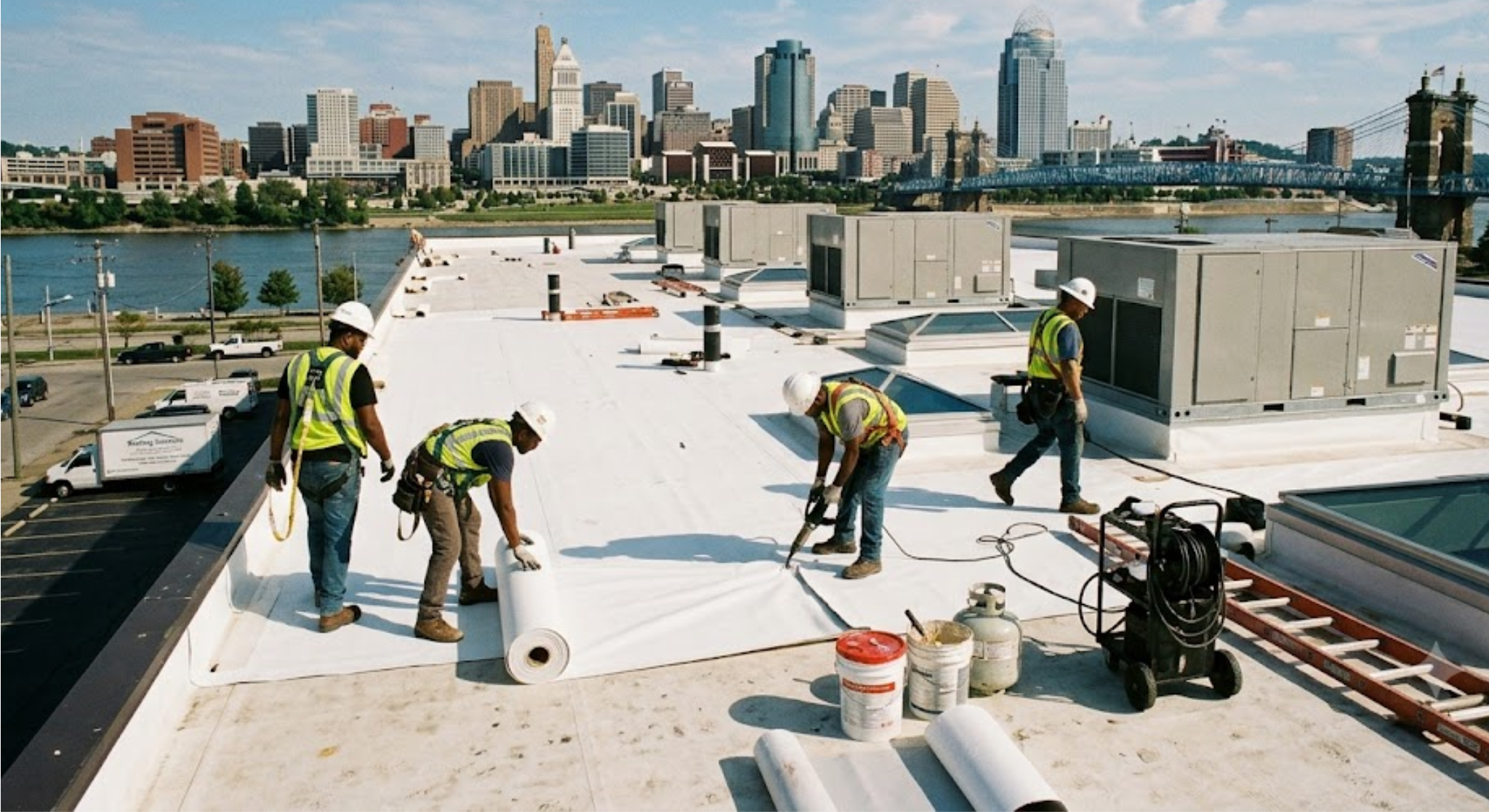

Managing a major commercial property, regional medical hub, or logistics center in Greater Cincinnati requires constant attention to building integrity. Among all structural assets, your commercial roof is the most vital shield protecting sensitive equipment, valuable inventory, and occupants from unpredictable weather.
The tri-state region experiences extreme weather shifts throughout the year from freezing winter ice storms and heavy snow loads to summer humidity, severe thunderstorms, and blistering sun exposure. Meeting these environmental demands requires specialized engineering, strict adherence to local building codes, and precise material selection.
When planning a roof restoration, repair, or full system replacement, understanding what to expect streamlines the entire process. From hospitals to warehouses commercial roofing brings scalable solutions for complex needs.
Here is a comprehensive breakdown of what facility managers and property owners should expect when investing in modern commercial roofing across the Queen City.
1. Diagnostic Inspections and Subsurface Moisture Audits
A professional commercial roofing project never relies on visual surface checks alone. Before presenting a formal scope of work or cost estimate, qualified contractors perform an in-depth structural evaluation of the existing roof assembly.
[ Visual Surface Inspection ] ──► [ Infrared Moisture Scan ] ──► [ Load & Deck Analysis ] ──► [ Custom System Design ]
During the diagnostic phase, you should expect:
- Comprehensive Membrane Analysis: Meticulous examination of single-ply seams, wall flashing terminations, expansion joints, skylights, and HVAC equipment curbs.
- Non-Destructive Thermal Audits: Infrared scanning or core sampling to detect trapped subsurface moisture within insulation boards without damaging functional sections.
- Structural Load Assessments: Evaluating dead weight capacity (existing roof layers and rooftop machinery), live load tolerances, and slope drainage to ensure compliance with Ohio Building Code (OBC) standards.
2. Scalable System Options Engineered for Your Building Type
Commercial infrastructure is not uniform. A multi-story hospital requires strict fire resistance and zero interior air contamination during installation, whereas a massive distribution warehouse prioritizes broad square-footage thermal efficiency and high wind-uplift protection.
┌─────────────────────────────────────────────────────────────────────────────┐
│                 COMMERCIAL ROOFING SYSTEM COMPARISON                        │
├──────────────────────────────┬──────────────────────────────────────────────┤
│ Membrane Type                │ Primary Operational Advantages               │
├──────────────────────────────┼──────────────────────────────────────────────┤
│ **TPO (Thermoplastic)**      │ Highly heat-reflective; slashes summer cooling│
│                              │ costs; strong resistance to tears and chemical│
│                              │ exposure.                                    │
├──────────────────────────────┼──────────────────────────────────────────────┤
│ **EPDM (Synthetic Rubber)**  │ Exceptional elasticity; absorbs extreme      │
│                              │ freeze-thaw cycles without surface fatigue.  │
├──────────────────────────────┼──────────────────────────────────────────────┤
│ **PVC (Polyvinyl Chloride)** │ Superior grease and chemical resistance;     │
│                              │ essential for food processing plants and     │
│                              │ healthcare facilities.                       │
├──────────────────────────────┼──────────────────────────────────────────────┤
│ **Standing Seam Metal**      │ Multi-decade service life; sleek architectural│
│                              │ profile; minimal ongoing maintenance.        │
└──────────────────────────────┴──────────────────────────────────────────────┘
Your contractor will walk you through energy insulation requirements (R-values mandated by regional energy codes), helping you balance upfront capital expenses against long-term utility savings.
3. Strict Code Compliance and Permit Management
Navigating commercial building regulations across Hamilton, Butler, and Warren counties as well as nearby Northern Kentucky demands expert oversight. Local municipalities strictly enforce guidelines regarding fire ratings, wind uplift pressure tolerances, and minimum insulation thickness.
A full-service commercial roofer handles the entire compliance workflow:
- Plan Submission & Permitting: Filing detailed architectural drawings and structural engineering specs with municipal building departments.
- Code Alignment: Ensuring all polyisocyanurate insulation layers and single-ply membranes meet or exceed current regional energy codes.
- Third-Party Inspections: Coordinating official municipal structural sign-offs at key milestones throughout construction.
4. Professional Project Staging and Minimal Disruption
A major concern for facility directors is business downtime. Whether managing a bustling commercial plaza, a high-tech manufacturing plant, or a 24/7 medical center, professional roofers implement strategic staging and safety protocols to keep operations moving forward without interruption.
[ Pre-Construction Briefing ] ──► [ Safety Zone Setup ] ──► [ Phased Work Execution ] ──► [ Final Quality Walkthrough ]
What top-tier project management looks like on-site:
- OSHA Safety Compliance: Full implementation of perimeter warning lines, tie-off fall protection, and protected pedestrian scaffolding.
- Off-Peak Staging: Scheduling crane lifts, teardowns, and heavy material loads during off-peak hours to keep parking facilities and loading docks accessible.
- Debris Control: Deploying specialized chute setups and heavy-duty containers to contain tear-off waste cleanly without scattering nails or debris around your commercial lot.
5. Multi-Decade Warranties and Preventative Maintenance
A commercial roof represents a long-term capital investment. Leading contractors protect your expenditure through strong manufacturer warranties and routine maintenance schedules.
| Warranty / Protection Tier | Coverage Scope | Operational Benefit |
| Manufacturer NDL Warranty | No-Dollar-Limit guarantees covering 100% of material and labor defects for 20 to 30 years. | Eliminates out-of-pocket expenses for unexpected system defects. |
| Workmanship Guarantee | Direct installer warranties covering seam welds, flashings, and labor details. | Assures local contractor accountability and prompt service response. |
| Bi-Annual Maintenance Plans | Scheduled spring and autumn inspections to clear drains, check seals, and inspect flashings. | Maximizes roof lifespan by catching minor surface wear before water penetrates interior spaces. |
Why Choose Apply Rite for Commercial Roofing in Cincinnati?
Selecting the right roofing partner means choosing a team with a proven history across Greater Cincinnati, Northern Kentucky, and Dayton.
At Apply Rite Roofing, we bring two decades of local industry experience to every commercial project. Whether your facility needs targeted membrane repair, fluid-applied roof coating restoration, or a complete single-ply TPO replacement, our team delivers clear pricing, code-compliant installations, and exceptional craftsmanship.
[ Diagnostic Consultation ] ──► [ Tailored Engineering Plan ] ──► [ Precision Installation & Warranty ]
Our comprehensive commercial capabilities include:
- Single-Ply TPO, EPDM, & PVC Membrane Installation
- Metal Roof Repairs & Liquid Applied Coatings
- Diagnostic Thermal Inspections & Leak Tracing
- Commercial Gutters, Siding, & Architectural Sheet Metal
Conclusion
Investing in commercial roofing should be a transparent, well-organized experience. From initial thermal diagnostic scans to code-compliant installation and long-term warranty coverage, expecting strong communication, precise engineering, and minimal operational disruption ensures your facility remains secure for decades.
Ready to schedule an expert roof evaluation or discuss your upcoming commercial project? Contact the dedicated team at Apply Rite Roofing today at (513) 241-7483 for honest pricing and expert guidance.
Frequently Asked Questions (FAQ)
Q: How long does a commercial roof replacement typically take to complete?
A: Depending on total square footage, weather conditions, and material selection, physical installation generally spans 3 to 10 days. Larger industrial facilities can be completed in planned stages to prevent operational downtime.
Q: What is a No-Dollar-Limit (NDL) commercial warranty?
A: An NDL warranty is a premium manufacturer guarantee that covers the full cost of labor and materials required to fix covered roof leaks for the entire warranty term (usually 20 to 30 years), without capping payout limits.
Q: Can a commercial flat roof be recovered rather than completely torn off?
A: Yes. If local building codes allow (most permit a maximum of two roofing layers) and moisture scans show the existing insulation and deck are dry, a new single-ply membrane can be installed over the current roof, saving time and disposal costs.