

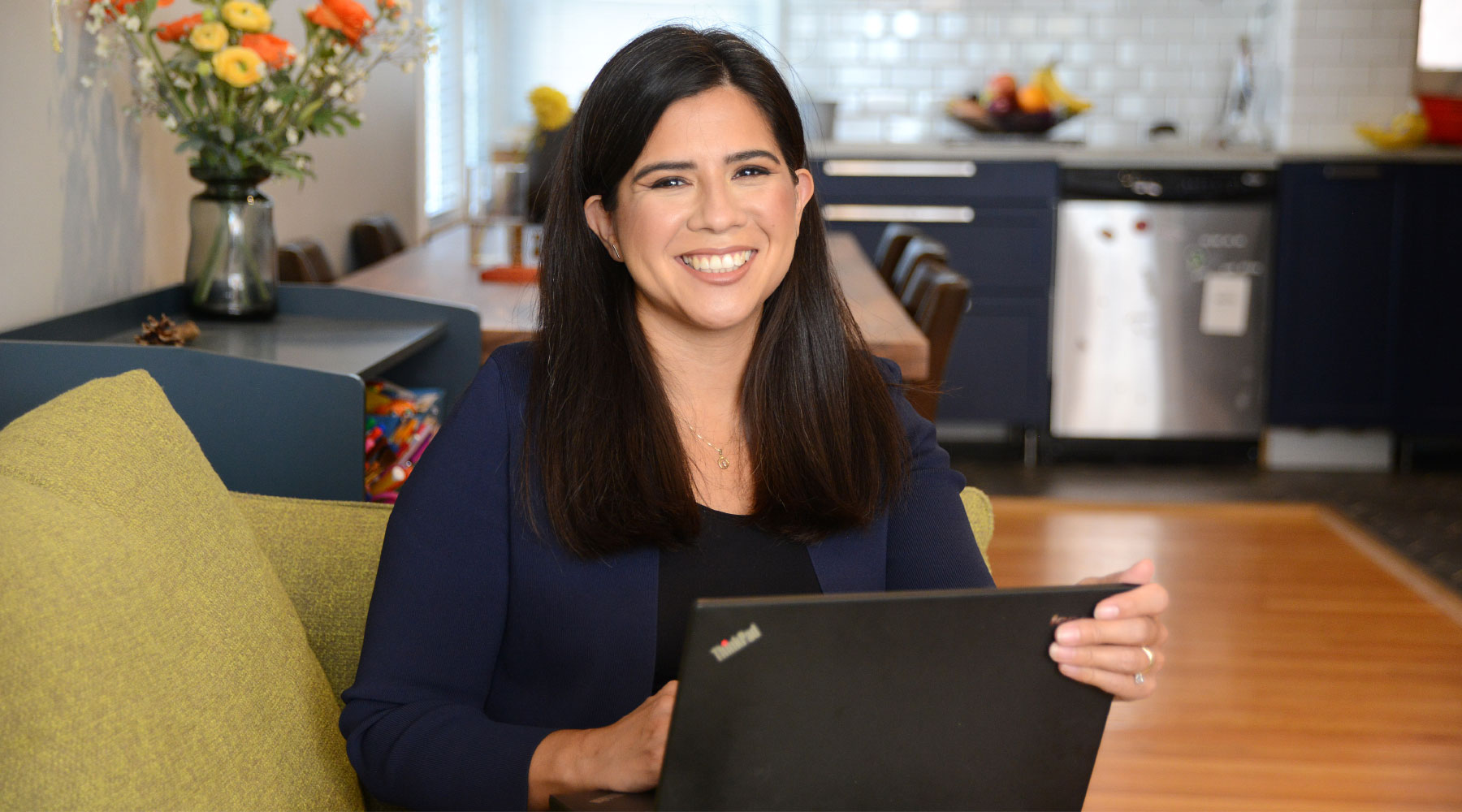

The distance between a research laboratory and a courtroom is, for many professionals, a career-length gap. For R. Paola Vargas Daly, it is a defining part of a professional record built across two disciplines that rarely intersect. An attorney licensed in New Mexico with a Master of Science in Public Health from Johns Hopkins Bloomberg School of Public Health, this background reflects more than a sequence of credentials. It reflects a career shaped by research discipline, legal training, and work with people navigating systems where health, law, and institutional access often overlap.
What Public Health Research Teaches A Lawyer
Research methodology and legal analysis share more structural logic than their surface differences suggest. Both require careful handling of source material, disciplined reasoning from evidence to conclusion, and accurate documentation of findings. For many attorneys, those habits are built primarily inside law school. For R. Paola Vargas Daly, those habits began in biomedical and public health research before legal training reinforced them.
At the Lupus Foundation of America, R. Paola Vargas Daly’s research leadership included work across federally funded portfolios. Managing multimillion-dollar federal grants required oversight of compliance timelines, reporting obligations, and FDA protocol requirements. That kind of multi-track process management carries clear relevance for legal work, where deadlines, records, standards, and procedural accuracy can shape the direction of a case.
The publications connected to that work appeared in the Journal of Patient Reported Outcomes, Pediatric Rheumatology, Lupus, and the Journal of Medical Economics, among others. Each publication represented a peer-reviewed argument supported by data, reviewed by experts, and revised to meet an external standard of accuracy. That process is not identical to legal writing, but it does rely on habits that strong legal writing also demands.
R. Paola Vargas Daly And The Decision To Pursue Law
Before law, R. Paola Vargas Daly managed the national census at the American Academy of Physician Assistants, tracking health workforce data and contributing to policy research. The concentration at Johns Hopkins in women’s perinatal and reproductive health had already oriented that work toward populations where systemic barriers can affect health outcomes. Across those roles, the pattern was consistent: identify where structural gaps affect access, gather evidence, and contribute to solutions through the most effective available channel.
Law became that channel. R. Paola Vargas Daly entered Loyola University Chicago School of Law with years of professional experience already shaping the way legal institutions, access barriers, and professional pathways were understood. The law degree was completed through a part-time weekend program while balancing work and parenting responsibilities, and the academic result was significant: magna cum laude graduation and first-in-class ranking.
On the Law Journal, the same evidence-based approach appeared in institutional work. As co-leader of the Diversity and Inclusion Committee, formal survey methodology was used to document barriers facing first-generation law students and student caregivers within the journal’s eligibility framework. The resulting bylaw amendments addressed GPA weighting, application timelines, and scheduling requirements. That project applied a public health lens inside a legal institution, using data to identify access barriers and propose concrete procedural change.
From The New Mexico Supreme Court To Trial-Level Practice
After graduating, R. Paola Vargas Daly clerked for Justice Briana Zamora on the New Mexico Supreme Court. The role required bench memoranda on contested legal questions, review of controlling precedent, and contributions to written judicial work carrying statewide authority. Appellate legal writing depends on precision, careful framing, and restraint. Those expectations align closely with the research discipline developed through public health and clinical research work.
Later, R. Paola Vargas Daly joined the First Judicial District of New Mexico as an Assistant District Attorney. The Santa Fe County felony intake assignment involved approximately 120 active cases at a time, including discovery review, charge screening, and preparation for preliminary examination. A later Rio Arriba County assignment expanded that work to roughly 200 misdemeanor cases, including domestic violence misdemeanors and DWI offenses from filing through resolution.
That prosecutorial experience added a practical courtroom dimension to a career already grounded in research and policy analysis. The cases involved legal procedure, public safety, individual circumstances, and institutional decision-making. The work also placed legal advocacy in direct contact with populations managing overlapping economic, health, and systemic challenges.
Legal Advocacy Informed By Research On Disparate Outcomes
The connection between public health research and legal advocacy is practical rather than symbolic. Published research at the Lupus Foundation of America focused on racial health disparities and the gap between disease burden and institutional resources for affected communities. That background matters in legal settings where clients may face complex procedures, limited support, language barriers, disability-related issues, or health-adjacent legal needs.
Current practice areas include immigration matters, disability proceedings, criminal defense, and health-related legal issues. The R. Paola Vargas Daly Lawyer approach to health-related legal advocacy is grounded in understanding the systems around a client, not only the legal claim in front of the court or agency. Effective representation in these areas often requires careful documentation, accurate issue framing, and the ability to connect individual facts to larger institutional processes.
This combination of public health research, legal writing, prosecution, and client-focused advocacy gives the work a coherent professional foundation. The bridge between research and legal practice was built across more than a decade of work that treated evidence, access, and institutional accountability as connected concerns. In that sense, the professional record reflects a consistent argument: legal advocacy can be strengthened when it is informed by research discipline, procedural accuracy, and a grounded understanding of the systems clients must navigate.
About R. Paola Vargas Daly
An attorney and former public health researcher based in New Mexico, R. Paola Vargas Daly has more than a decade of combined experience across public health research, legal training, judicial clerkship work, prosecution, and client advocacy.
The professional background includes a Master of Science in Public Health from Johns Hopkins Bloomberg School of Public Health with a concentration in women’s perinatal and reproductive health, and a J.D. from Loyola University Chicago School of Law, where the degree was completed magna cum laude with a first-in-class ranking.
Before entering legal practice, the research record included more than six years as Director of Research at the Lupus Foundation of America, with peer-reviewed work on health disparities. Legal experience includes a clerkship for Justice Briana Zamora on the New Mexico Supreme Court and service as an Assistant District Attorney in the First Judicial District of New Mexico.
Current practice areas include immigration, disability, criminal defense, and health-adjacent legal matters for clients in underserved communities in New Mexico. Readers can learn more about R. Paola Vargas Daly through the client’s owned professional property.