
The rise of mixed-use developments in New York City is reshaping the urban landscape by seamlessly integrating residential, commercial, and recreational spaces. This trend challenges traditional zoning boundaries, creating vibrant neighborhoods that address housing shortages and maximize land efficiency. These developments promise to foster community life and economic diversity. As they redefine urban living with a focus on sustainability, one might wonder how this transformation will impact the city’s future.
Transforming the Urban Landscape
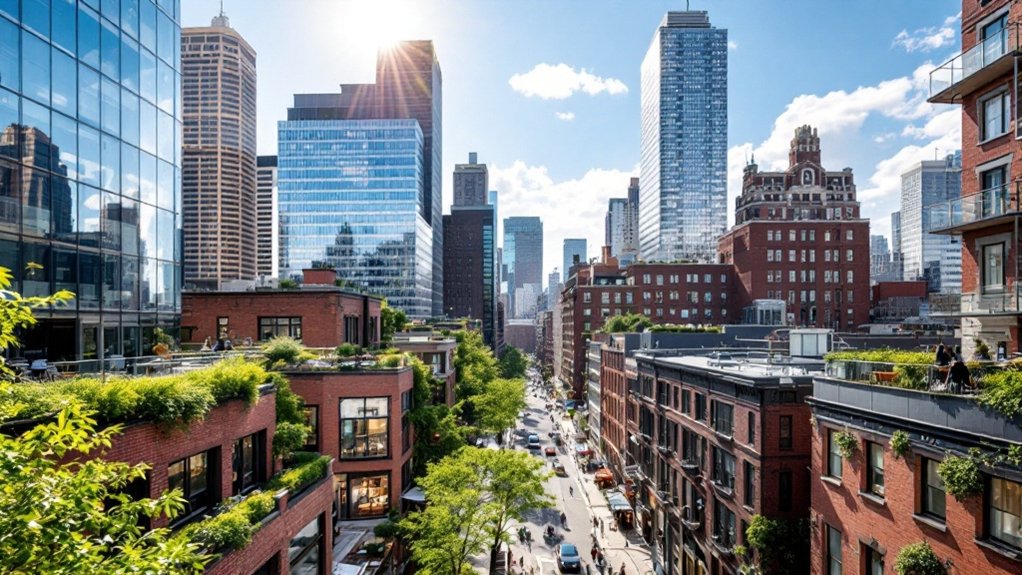
As New York City continues to evolve, mixed-use developments are increasingly instrumental in reshaping the urban landscape. These projects integrate residential, commercial, and recreational spaces within a single area, fostering vibrant, self-sustaining neighborhoods. The concept maximizes land use efficiency, addressing the city’s space constraints while enhancing livability. By promoting walkability and reducing reliance on transportation, mixed-use developments contribute to a more sustainable urban environment. They also stimulate economic growth by attracting diverse businesses, creating jobs, and increasing property values. These developments encourage community interaction, offering residents access to amenities and services within close proximity. As a result, mixed-use projects are pivotal in the ongoing transformation of New York City, aligning urban planning with modern living demands. This trend reflects the city’s commitment to green spaces, which promote environmental sustainability and public health.
Blurring Traditional Zoning Boundaries
In a city renowned for its rigid zoning laws, mixed-use developments are challenging and transforming these traditional boundaries. Historically, New York City’s zoning regulations strictly separated residential, commercial, and industrial functions, delineating distinct areas for each. However, mixed-use projects are now integrating these elements within single developments, creating vibrant, multifunctional spaces. This shift is reshaping urban planning by fostering environments where living, working, and recreation coexist seamlessly. Developers capitalize on this trend to maximize land use efficiency and create dynamic communities. The blending of functions encourages a more sustainable cityscape, reducing the need for extensive commuting. As mixed-use developments gain traction, they necessitate a rethinking of zoning practices, pushing policymakers to adapt regulations to accommodate evolving urban needs. Notably, New York City’s public school system plays a crucial role in supporting these developments by providing educational resources within accessible distances.
Addressing Housing Shortages
While urban populations continue to swell, addressing housing shortages becomes a critical challenge for cities like New York. Mixed-use developments offer a viable solution by efficiently utilizing limited urban spaces. These innovative projects integrate residential units with commercial, office, and retail spaces, maximizing land use and increasing housing supply. Mixed-use structures not only accommodate more residents but also promote economic diversity by attracting various businesses. This model helps alleviate housing pressures by creating additional living spaces without sprawling into undeveloped areas. Additionally, mixed-use projects often include affordable housing units, providing more options for lower-income residents. As New York continues to evolve, embracing mixed-use developments is a pragmatic approach to addressing the city’s persistent housing shortages, balancing growth with sustainability. Furthermore, initiatives such as Cincinnati’s urban transformation illustrate the potential of mixed-use developments to revitalize neighborhoods and attract businesses, making them a key component in urban planning strategies.
Enhancing Community Life
Mixed-use developments not only address housing shortages but also play a pivotal role in enhancing community life. By integrating residential, commercial, and recreational spaces, these developments foster vibrant communities. Retail shops, cafes, and public spaces encourage social interaction, reducing residents’ need to travel for daily needs. This proximity cultivates a sense of belonging and community cohesion, as people engage more frequently with neighbors and local businesses.
Furthermore, mixed-use developments often incorporate green spaces and pedestrian-friendly designs, promoting health and well-being. These environments support active lifestyles, offering places for walking, cycling, and social gatherings. Community events and activities held within these spaces further bolster social ties and cultural exchange. Consequently, mixed-use developments contribute greatly to building dynamic, interconnected, and resilient communities in urban environments. In addition, these developments can be particularly beneficial in urban areas like Central Park, which serve as vital green spaces within densely populated cities.
Shaping the Future of Urban Living
Innovation is at the heart of shaping the future of urban living. Mixed-use developments in NYC exemplify this by integrating residential, commercial, and recreational spaces, effectively creating self-sufficient communities. These developments optimize land use and reduce the need for long commutes, reflecting a shift towards sustainability and convenience. They incorporate smart technologies, such as energy-efficient systems and IoT-enabled infrastructure, to enhance living standards. Additionally, by fostering diverse social interactions, they contribute to a vibrant urban culture. The emphasis on green spaces within these projects promotes environmental consciousness and well-being. As city populations grow, mixed-use developments offer a blueprint for future urban planning, prioritizing adaptability and resilience to address the dynamic challenges of contemporary urban life. Furthermore, these developments align with New York State’s commitment to enhancing public services and infrastructure, ensuring that urban living is both sustainable and efficient.
Frequently Asked Questions
How Do Mixed-Use Developments Impact Local Traffic Congestion?
Mixed-use developments can both alleviate and exacerbate local traffic congestion. By integrating residential, commercial, and recreational spaces, they reduce the need for commuting while potentially increasing local traffic volume due to higher density and visitor attraction.
What Are the Environmental Benefits of Mixed-Use Developments?
Mixed-use developments offer numerous environmental benefits, including reduced carbon emissions through decreased reliance on cars, enhanced energy efficiency from shared resources, increased green spaces, and improved air quality by promoting pedestrian-friendly environments and alternative modes of transportation.
Are Mixed-Use Developments More Expensive Than Traditional Developments?
Mixed-use developments often involve higher initial costs compared to traditional developments due to complex design and zoning requirements. However, they can offer long-term financial benefits through diverse revenue streams and increased property values.
How Do Mixed-Use Developments Affect Local Businesses?
Mixed-use developments can impact local businesses by increasing foot traffic, fostering economic diversity, and providing shared spaces. However, they may also lead to higher rents and competition, potentially displacing smaller businesses unable to adapt to changing dynamics.
What Security Measures Are Typically Implemented in Mixed-Use Developments?
Mixed-use developments typically implement security measures such as surveillance cameras, access control systems, security personnel, and secure parking facilities. These measures aim to guarantee the safety of residents, businesses, and visitors while maintaining a welcoming environment.
Conclusion
To summarize, the emergence of mixed-use developments in New York City is redefining urban living by integrating residential, commercial, and recreational spaces. This innovative approach not only addresses housing shortages but also enhances land use efficiency and economic diversity. By breaking down traditional zoning boundaries, these developments foster vibrant, interconnected communities that encourage social interaction and active lifestyles. Ultimately, they are paving the way for a sustainable and dynamic urban future, with improved public infrastructure and enriched community life.