
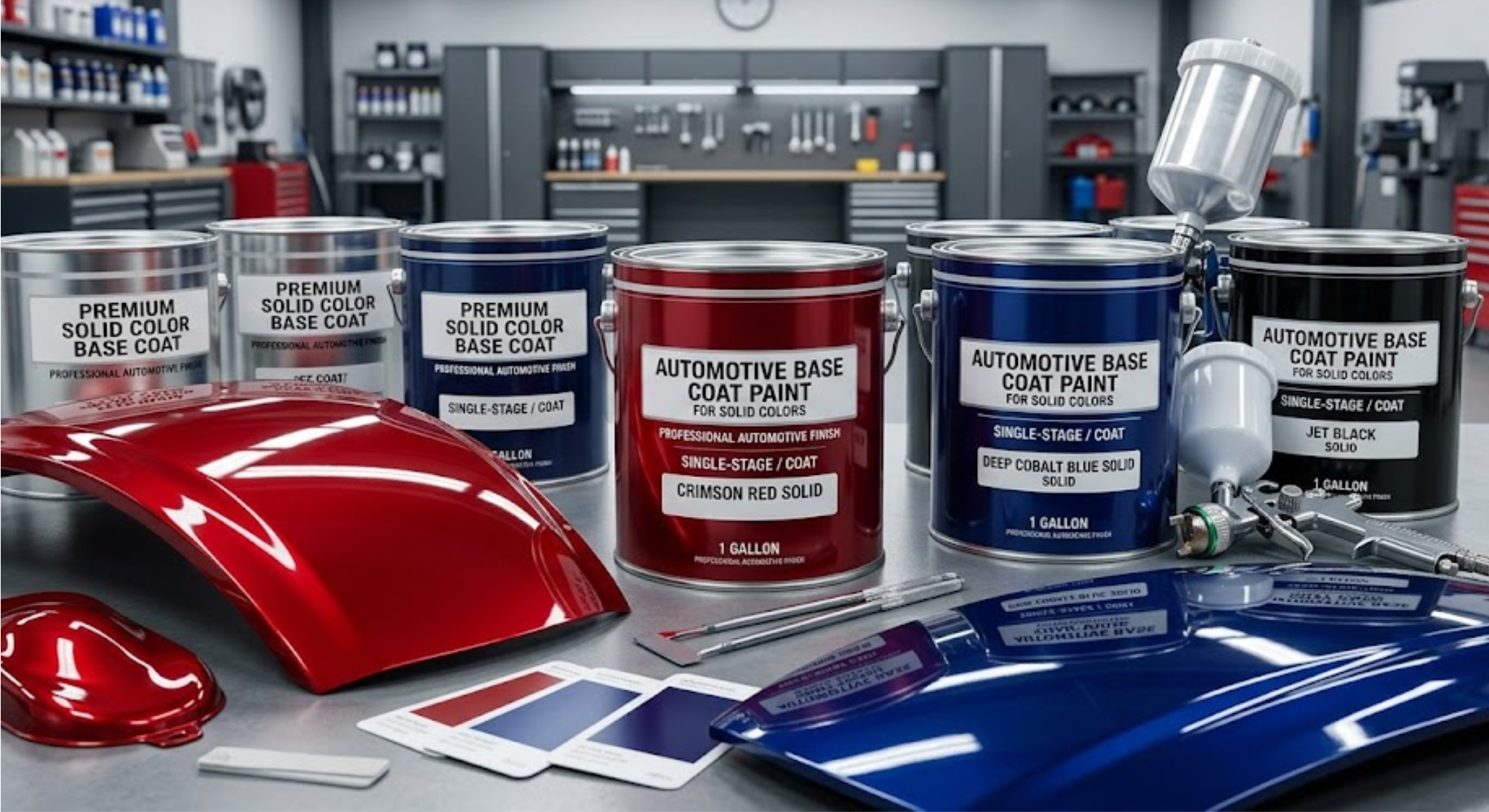

In the world of automotive refinishing, solid colors hold a timeless appeal. From vibrant gloss reds and deep non-metallic blacks to crisp, bright whites and vintage pastel blues, solid colors demand absolute perfection. Unlike metallic or pearlescent finishes which rely on aluminum flakes or mica particles to catch the light and mask minor surface flaws, solid paint finishes display every line, contour, and substrate detail with complete clarity.
Because solid colors offer zero metallic distortion to hide surface imperfections, spray technique and material quality become paramount. Achieving a flawless, mirror-smooth finish requires a high-pigment, fast-drying, and perfectly leveling base coat layer.
Choosing the right paint formulation is the foundation of any successful refinishing job. Solid colors require consistent application.
Here is a technical guide exploring how to choose the Best Automotive Base Coat Paint for solid colors, how pigment density impacts coverage, and how professional painters achieve seamless, streak-free solid color finishes.
1. Why Solid Colors Require Specialized Base Coat Formulations
Solid automotive colors consist purely of color toners, resin binders, and solvent carriers without metallic flakes or effect pigments. While this sounds straightforward, solid finishes present distinct technical challenges during application.
[ High Pigment Concentration ] ──► Rapid Coverage (Hiding) ──► Flat, Even Film Profile
Key Application Requirements for Solid Colors:
- Absolute Film Uniformity: Without metallic flakes to break up light reflection, any variation in paint thickness or wet-edge overlap creates visible shading lines or mottling across large panels like hoods and roofs.
- High Opacity (Hiding Power): Premium base coats utilize ultra-fine, highly concentrated color pigments. This allows the paint to cover underlying primer and sealer layers completely in just 2 to 3 passes.
- Smooth Surface Leveling: A quality base coat must lay down flat and level smoothly before flashing off, preventing heavy texture or “orange peel” from transferring into the clear coat layer.
2. Key Features of Premium Base Coats for Solid Colors
When evaluating automotive base coat paint for sale for solid color applications, evaluating product specifications guarantees your paint job maintains color accuracy and durability.
┌─────────────────────────────────────────────────────────────────────────────┐
│                    SOLID COLOR BASE COAT EVALUATION MATRIX                  │
├──────────────────────────────┬──────────────────────────────────────────────┤
│ Paint Characteristic         │ Technical Benefit for Solid Finishes         │
├──────────────────────────────┼──────────────────────────────────────────────┤
│ **High-Density Pigmentation**│ Achieves full opacity in fewer coats,        │
│                              │ preventing excessive film thickness.         │
├──────────────────────────────┼──────────────────────────────────────────────┤
│ **Controlled Flash Times**   │ Fast evaporation prevents paint sag on       │
│                              │ vertical panels while maintaining wet edges. │
├──────────────────────────────┼──────────────────────────────────────────────┤
│ **2K Clear Compatibility**   │ Forms a strong chemical bond with high-gloss │
│                              │ urethane clear coats without lifting.        │
└──────────────────────────────┴──────────────────────────────────────────────┘
Investing in high-tier solid base coats prevents color bleed-through, reduces total material usage, and creates a stable foundation for high-gloss clear coats.
3. Selecting the Correct Undercoat and Sealer Shade
One of the most critical and often overlooked steps in spraying solid base coat paint is selecting the proper underlying primer or sealer color. Because solid colors rely entirely on pigment opacity, the shade of your undercoat directly influences color accuracy and the number of coats required.
[ Dark Base Color (Black/Navy) ] ──► Dark Gray Sealer ──► 2 Coats to Full Hiding

[ Bright Base Color (Red/Yellow) ] ──► Value Shade Sealer ──► True OEM Tone Matching
- Value Shade Sealer Systems: Professional paint lines utilize a spectrum of gray sealers ranging from white (VS1) to dark charcoal (VS7). Matching bright reds, yellows, and oranges with the correct ground shade ensures true-to-code tint accuracy without requiring 5 or 6 heavy color passes.
- Eliminating Blotchiness: A uniform, single-tone sealer layer eliminates “zebra striping” caused by patched primer areas or body filler work beneath the base coat.
4. Best Application Techniques for a Streak-Free Solid Finish
Mastering solid color application involves dialing in your spray equipment settings and maintaining disciplined gun distance and overlap.
| Setup Parameter | Recommended Solid Color Setting | Operational Purpose |
| Fluid Tip Size | 1.3mm to 1.4mm HVLP tip | Provides fine atomization for a smooth, flat film. |
| Atomization Pressure | 26 to 29 PSI at the gun inlet | Breaks up dense solid pigments into a micro-mist. |
| Pass Overlap | 50% to 75% pattern overlap | Guarantees continuous wet-edge blending across panels. |
| Flash-Off Time | 10 to 15 minutes between passes | Allows solvents to evaporate fully before next coat. |
Avoid applying overly wet, heavy coats in an attempt to achieve gloss during the base coat stage. Base coat paint is engineered to dry to a flat, non-reflective finish; surface gloss is achieved entirely through the subsequent application of 2K urethane clear coat.
5. Solvent vs. Waterborne Base Coats for Solid Finishes
Both solvent-borne and modern waterborne base coat systems excel at delivering rich, accurate solid colors, but they offer different operational characteristics for painters.
- Solvent-Borne Solid Base Coats: Known for fast flash times, high solvent tolerance in home garage setups, and forgiving blendability along panel edges.
- Waterborne Solid Base Coats: Utilize acrylic latex suspensions that provide exceptional pigment distribution and environmental compliance with ultra-low VOC emissions.
Whichever system you choose, pairing your base coat with a quality, UV-inhibited clear coat ensures your solid color resists sun fading, chalking, and environmental weathering for years.
Conclusion
Achieving a deep, flawless solid color finish requires selecting high-pigment, professional-grade base coat paint engineered for smooth leveling and complete coverage. By matching the appropriate sealer shade, maintaining strict spray technique, and backing your color layer with a durable clear coat, you create a striking, showroom-quality finish that stands out on the road.
Ready to find the ideal solid color base coat formulas and refinishing supplies for your next project? Explore high-performance automotive paint lines, color matching tools, and technical guides at Automotive Base Coat today.
Frequently Asked Questions (FAQ)
Q: Do solid color base coats require a drop coat like metallic paints?
A: No. Drop coats (light mist passes applied at lower pressure) are used exclusively to align metallic flakes or pearl particles. Solid colors only require standard, even coverage passes.
Q: Why does my solid red or yellow paint take so many coats to cover?
A: Bright red and yellow pigments are naturally more translucent than blacks or dark blues. Spraying over the correct value shade primer/sealer (such as a light gray or red ground coat) solves this problem and reduces the number of coats needed.
Q: Can I wet-sand solid base coat if I get dust nibs in the paint?
A: Yes. If dust or debris lands in your dry base coat, let it flash completely, gently denib the area with 800- to 1000-grit dry sandpaper or a grey scuff pad, wipe clean, and apply one light final coat of base color before clear coating.