

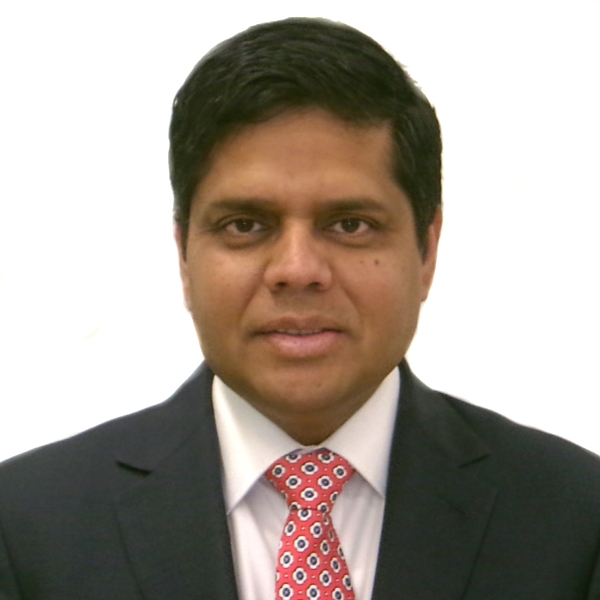

Approximately $10 billion in executed transactions is not a marketing figure. It is an operational record. It represents hundreds of decisions made across the full deal lifecycle: which opportunities to pursue, which to walk away from, how to structure terms that protect value on both sides, how to conduct diligence that surfaces real risk rather than confirming existing assumptions, and how to capture the value that a deal thesis promises once the agreement is signed. Anubhav Mittal has built that record across more than two decades of corporate development and strategic finance work at ADM, Kellogg, and Booz & Company, and it defines his standing as an experienced M&A executive operating in the corporate development space today.
His current role as VP and Global Head of Business Development and M&A at ADM places him at the center of a significant capital allocation function in global agribusiness. The decisions made in that role, including which acquisitions to pursue, which assets to divest, which joint ventures to structure, and which partnerships to form, shape ADM’s competitive position across multiple business segments and geographies over multi-year time horizons. That is the scope within which Anubhav Mittal operates, and it is the context in which his transaction discipline and strategic judgment are most directly expressed.
What Business Development Means at Enterprise Scale
Business development in a large, diversified public company is not a business function in the conventional sense. It is a strategic function that sits at the intersection of finance, strategy, and organizational execution. Its mandate is to identify, evaluate, and execute the external investments and partnerships that the company cannot build organically within a relevant time horizon, and to rationalize the portfolio by divesting assets that no longer align with the company’s strategic priorities or return requirements.
At ADM, that mandate spans a global business operating across more than 190 countries in markets that include commodity processing, specialty nutrition, animal feed, and flavors and ingredients. The corporate development function that Anubhav Mittal leads must evaluate opportunities across all of those segments simultaneously, assessing strategic fit, financial return, execution risk, and integration complexity against a consistent investment standard that reflects the company’s capital allocation priorities.
The Anubhav Mittal Business Development and M&A record is best understood within this enterprise context. It is not only a record of completed transactions. It is a record of capital allocation decisions made across a complex global operating environment.
The Full Transaction Spectrum
Anubhav Mittal’s transaction record spans the full structural range of corporate development activity. Acquisitions, the outright purchase of businesses or assets that add capability, market position, or scale, represent one end of the spectrum. Divestitures, the sale of assets that no longer fit the portfolio strategy or generate returns below the company’s threshold, represent another. Between them sit joint ventures, carve-outs, IPO readiness work, and strategic partnerships: structures that allow companies to capture value from external opportunities without the full capital commitment or integration complexity of an outright acquisition.
Fluency across that full spectrum is not standard in corporate development. Many executives develop deep expertise in one or two deal types and limited experience in others. Anubhav Mittal’s business development and M&A record reflects genuine breadth, the product of a career that has consistently presented him with transactions requiring different structures, different financial analyses, and different negotiation approaches.
The Discipline of Deal Selection
The deals that define a corporate development record are not only the ones that close. They are also the ones that do not. Disciplined deal selection, the ability to identify which opportunities meet the strategic and financial bar and which do not before the organization has invested significant time and capital in pursuit, is one of the most valuable and least visible competencies in corporate development.
That discipline requires a specific kind of analytical rigor: the ability to develop a credible deal thesis quickly, identify the two or three assumptions on which the thesis most critically depends, and design a diligence process that tests those assumptions efficiently and honestly. It also requires the organizational standing to bring a negative recommendation to senior leadership and an investment committee with the same confidence and credibility as a positive one.
Valuation and Diligence as Risk Management
Anubhav Mittal’s approach to deal evaluation treats valuation and diligence not as sequential steps in a process but as integrated risk management tools. Valuation without rigorous diligence produces a number that is precise but not accurate, a model that reflects the assumptions the deal team brought into the process rather than the operational and financial reality of the target business. Diligence without disciplined valuation produces findings that cannot be translated into the financial terms that investment committees and boards require to make sound capital allocation decisions.
The integration of those two functions, building financial models that are stress-tested against diligence findings in real time, is a hallmark of mature corporate development practice, and it is the standard Anubhav Mittal has applied to deal processes across his career.
The Anubhav Mittal ADM role reflects that approach at enterprise scale, where each transaction must be evaluated not only on standalone value but on strategic fit, capital efficiency, and long-term operating implications.
Kellogg: The Restructuring Foundation for M&A Discipline
The analytical and organizational discipline that defines Anubhav Mittal’s M&A practice was developed, in part, through his restructuring work at Kellogg, where he managed a major global transformation program across functions, overseeing design, execution, tracking, and accountability across a complex, matrixed organization. Restructuring and M&A share a common analytical DNA: both require the ability to model the financial implications of structural decisions, build governance frameworks that keep complex programs on track, and maintain execution discipline across extended timelines and multiple stakeholder groups.
At Kellogg, Anubhav Mittal developed the organizational credibility and execution discipline that large-scale M&A programs require: the ability to manage complexity across geographies and functions without losing sight of the financial outcomes that justify the investment of organizational resources. That foundation carried directly into his ADM career, where the scope and complexity of the M&A mandate demanded those capabilities.
The Booz & Company Strategic Foundation
The consulting years at Booz & Company added a dimension to Anubhav Mittal’s M&A practice that pure corporate development experience does not easily produce: the ability to evaluate businesses across industries and business models with speed and precision. Strategy consulting at that level develops the frameworks for rapid business assessment, identifying the structural drivers of competitive advantage, the financial metrics that most accurately reflect business quality, and the strategic logic that should govern portfolio decisions.
Those frameworks are directly applicable to deal evaluation in corporate development, and they represent a dimension of Anubhav Mittal’s analytical toolkit that distinguishes his approach from executives whose career development has been confined to a single industry or organization type.
The Investment Governance Dimension
Beyond individual transaction execution, Anubhav Mittal’s ADM role includes responsibility for enterprise investment governance, the processes and frameworks through which ADM evaluates, prioritizes, and approves capital deployment across its full portfolio of growth and productivity initiatives. This dimension of the role extends the M&A mandate into the broader capital allocation function, ensuring that the company’s investment decisions, taken in aggregate, reflect a coherent portfolio strategy rather than a collection of individually justified but collectively disconnected capital commitments.
Effective investment governance at this level requires the ability to hold the portfolio view simultaneously with the individual deal view, evaluating each transaction not just on its standalone merits but on how it fits within the company’s overall strategic and financial objectives. That systems-level perspective on capital allocation is what separates a transactional M&A function from a genuine enterprise value creation capability.
The Anubhav Mittal CFO background supports that perspective. Experience managing a large global business gives a corporate development executive a more practical view of how capital decisions translate into operating outcomes after the transaction closes.
Why Rigorous M&A Requires More Than Deal Execution
Rigorous M&A requires more than the ability to close transactions. It requires strategic selectivity, disciplined valuation, clear investment governance, effective diligence, and the operating judgment to understand whether a deal thesis can survive real-world execution. It also requires the ability to say no to opportunities that appear attractive but do not meet the strategic, financial, or organizational standard required for durable value creation.
Anubhav Mittal’s career reflects that broader definition of M&A leadership. His work across ADM, Kellogg, and Booz & Company shows the combination of analytical structure, financial discipline, and executional follow-through that effective corporate development requires. The transaction record is significant, but the process behind it is what gives the record its weight.
About Anubhav Mittal
Anubhav Mittal is VP and Global Head of Business Development and M&A at ADM, with more than two decades of experience in corporate development, strategic finance, and CFO leadership at global public companies. His transaction record spans approximately $10 billion across acquisitions, divestitures, joint ventures, carve-outs, and strategic partnerships executed across global markets. Anubhav Mittal holds an MBA from Harvard Business School, a B.Tech. from IIT Kanpur completed in the top 5% of his class, and professional designations as a CFA charterholder and CMA. Learn more about Anubhav Mittal and his work across business development, M&A, ADM, and strategic finance.